Visit Bordeaux in 2 Days: The Perfect Itinerary
Visit Bordeaux in 2 days and you will see far more of this beautiful city in southwestern France than you might expect. Over one weekend you can walk the UNESCO World Heritage port of the Moon, admire Place de la Bourse and its famous water mirror, stroll Rue Sainte-Catherine, climb the Pey Berland tower beside the gothic cathedral, explore the Chartrons district and spend an afternoon at the Cité du Vin. This 2 day itinerary is designed to be walked, with a couple of tram rides, a wine tasting, lunch at the Marché des Capucins and an evening along the Garonne river. Based at the Grand Hôtel Français on Rue du Temple, the whole route sits within easy walking distance. This article is the ultimate guide, step by step, with the spots we recommend most.
Day 1: Bordeaux historic centre on foot
The first day belongs entirely to the old town, the honey-coloured stone quarter that earned the city its UNESCO World Heritage listing in 2007. The historic center needs no complicated map: from Place de la Bourse to Place Pey Berland, from the Saint-Pierre neighborhood to the covered market, everything sits inside a twenty-minute walk. Staying on Rue du Temple, between the Grand Théâtre and Place Gambetta, puts you in the middle of that triangle. A local tip: start early, before the main shopping street fills up, because the low morning light on those 18th century facades is the most beautiful of the day.
Your day 1 at a glance:
• Miroir d'eau, Garonne quays and Pont de Pierre
• Saint-Pierre district and Porte Cailhau
• Marché des Capucins, oysters and Saint-Michel
• The gothic bell tower, its panoramic view and the shopping streets
• Grand Théâtre, opera and a signature cocktail
Morning: Place de la Bourse, water mirror and the Garonne river
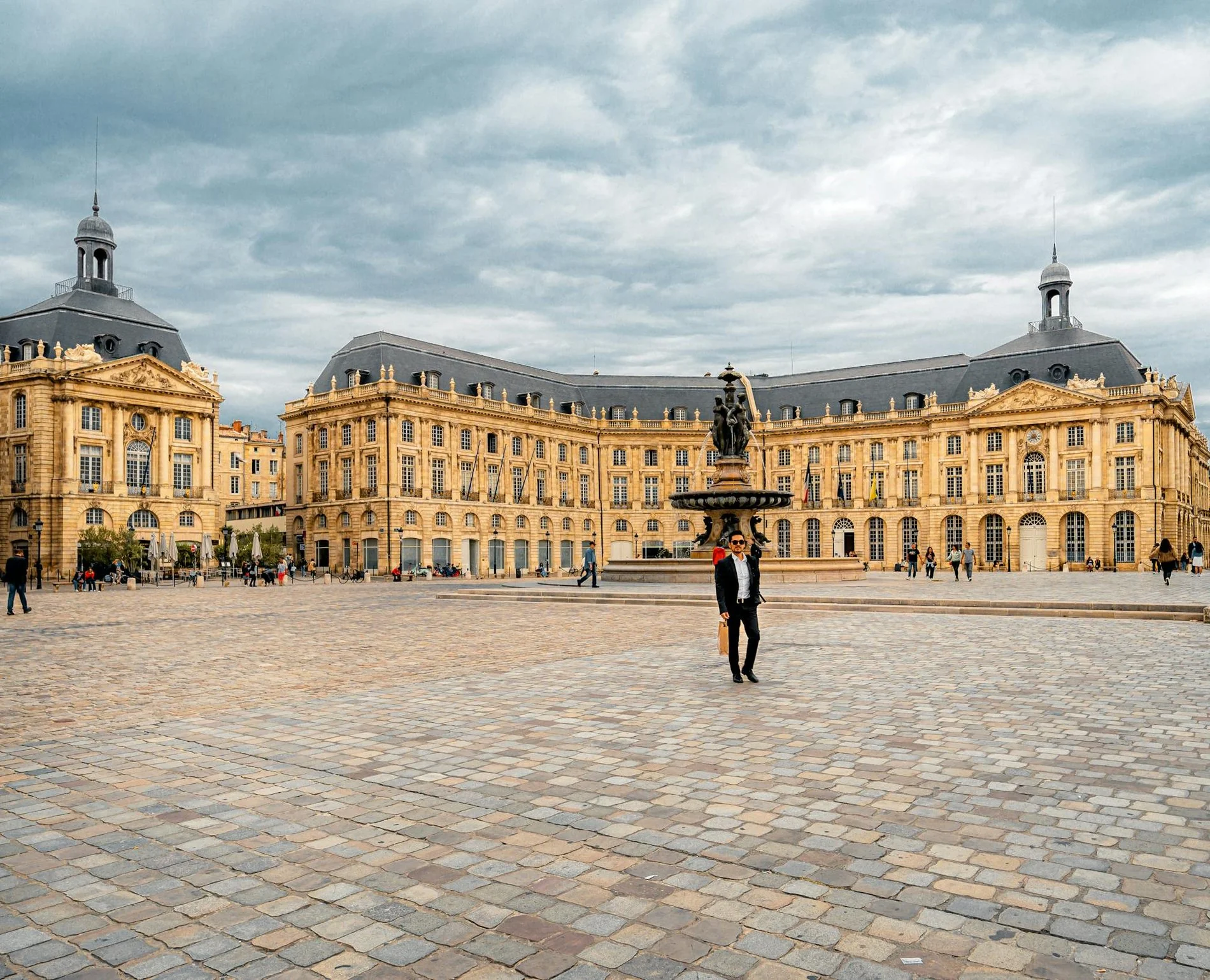
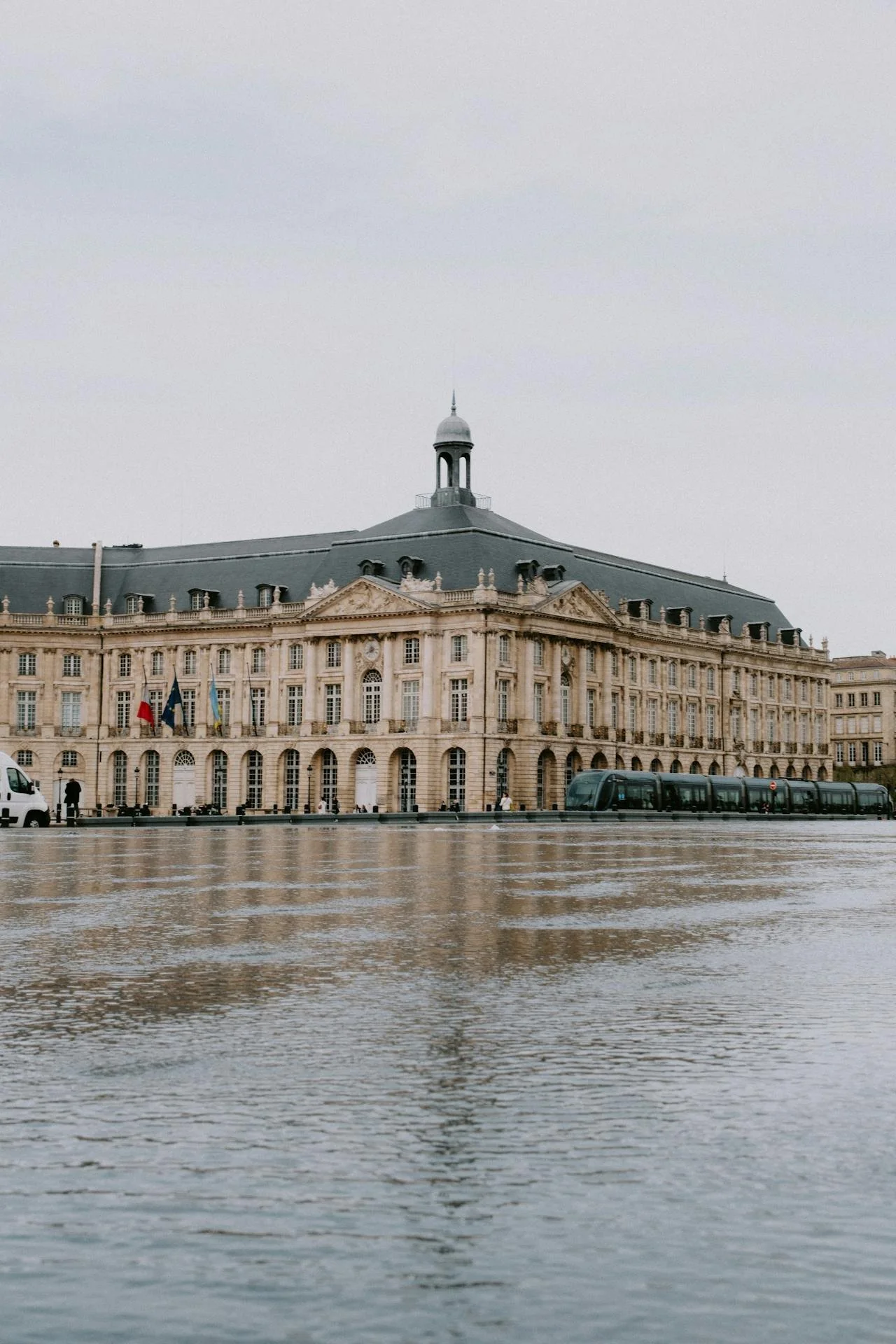
Start at Place de la Bourse, built by Ange-Jacques Gabriel between 1730 and 1775 and still the most iconic square in town. Facing it, the miroir d'eau designed by landscape architect Michel Corajoud spreads 3,450 m² of polished granite. The cycle alternates a thin film of water with a cloud of mist every few minutes. The best moment for a photo? Just after the mist clears, when the surface goes perfectly still and the building doubles itself in the reflection. Children run across it barefoot on warm days, and nobody minds.
Continue along the redeveloped quays, which follow the curve of the river. This crescent of the Garonne gave Bordeaux its nickname, the port of the Moon, still visible on the city coat of arms. You will pass runners, sleepy café terraces, moored cruise boats and, straight ahead, the Pont de Pierre with its seventeen arches.
Stop for coffee and a pastry near Hangar 14, with a view over the water. Allow 90 minutes for this first walk, photos included. Take time to look north, where the old port cranes still punctuate the roofline.
Late morning: Saint-Pierre district and Porte Cailhau
Leave the quays through Porte Cailhau: this gate once marked the entrance to the medieval city and now works as a threshold into the old quarter of narrow lanes and antique shopfronts.
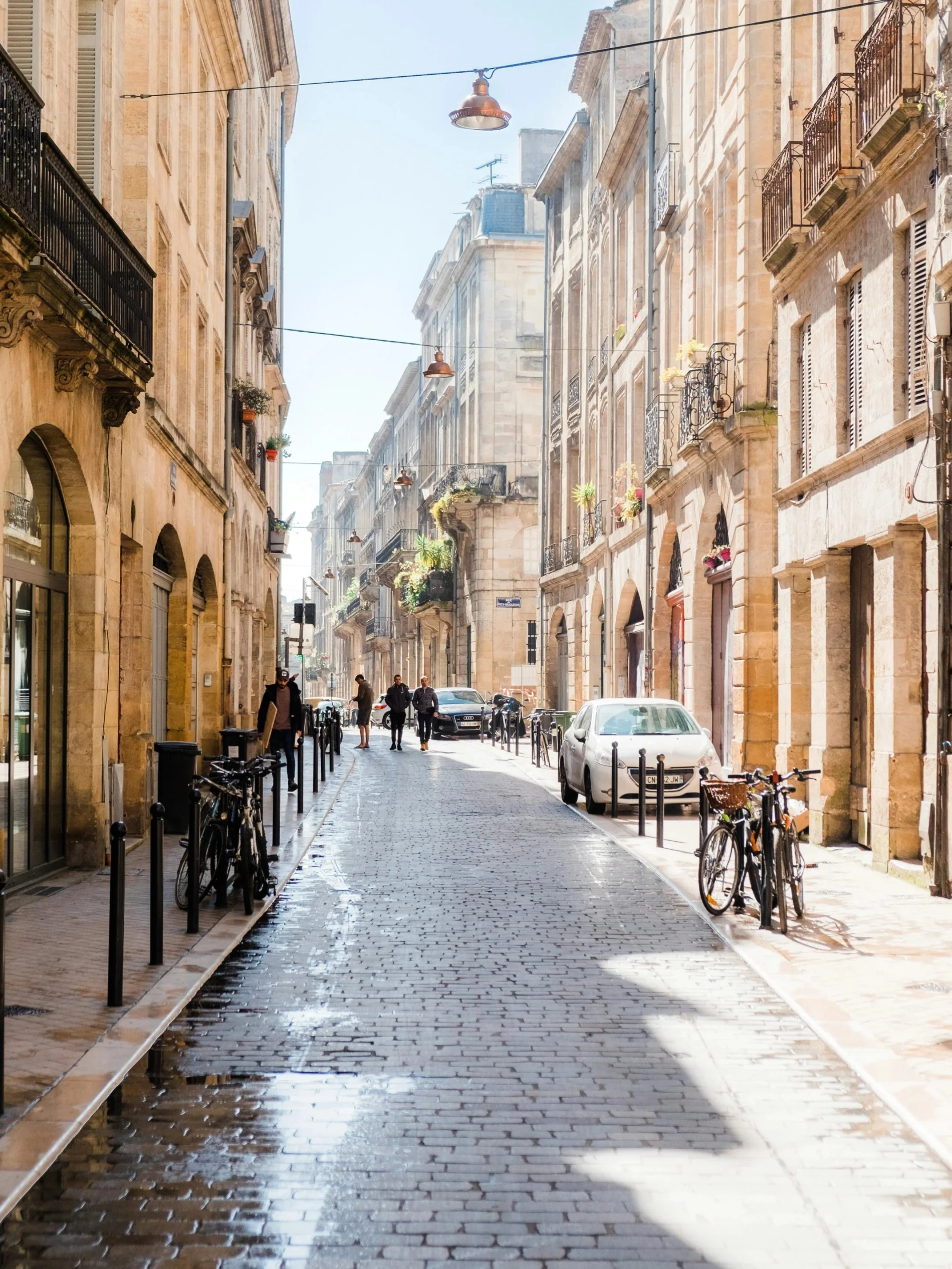
Saint-Pierre packs an unusual number of small shaded squares into a few blocks. Place du Parlement, framed by arcaded buildings, is the most photogenic spot in the area and a genuine postcard in the open air. Look up as you wander: carved mascarons, wrought-iron balconies, coats of arms above the doorways. Two minutes away, a quieter square and its gothic church offer a proper pause.
Want a souvenir that is not a fridge magnet? The shops on Rue du Pas-Saint-Georges and Rue des Bahutiers sell ceramics, leather goods and work by local makers.
Lunch: Marché des Capucins and Saint-Michel
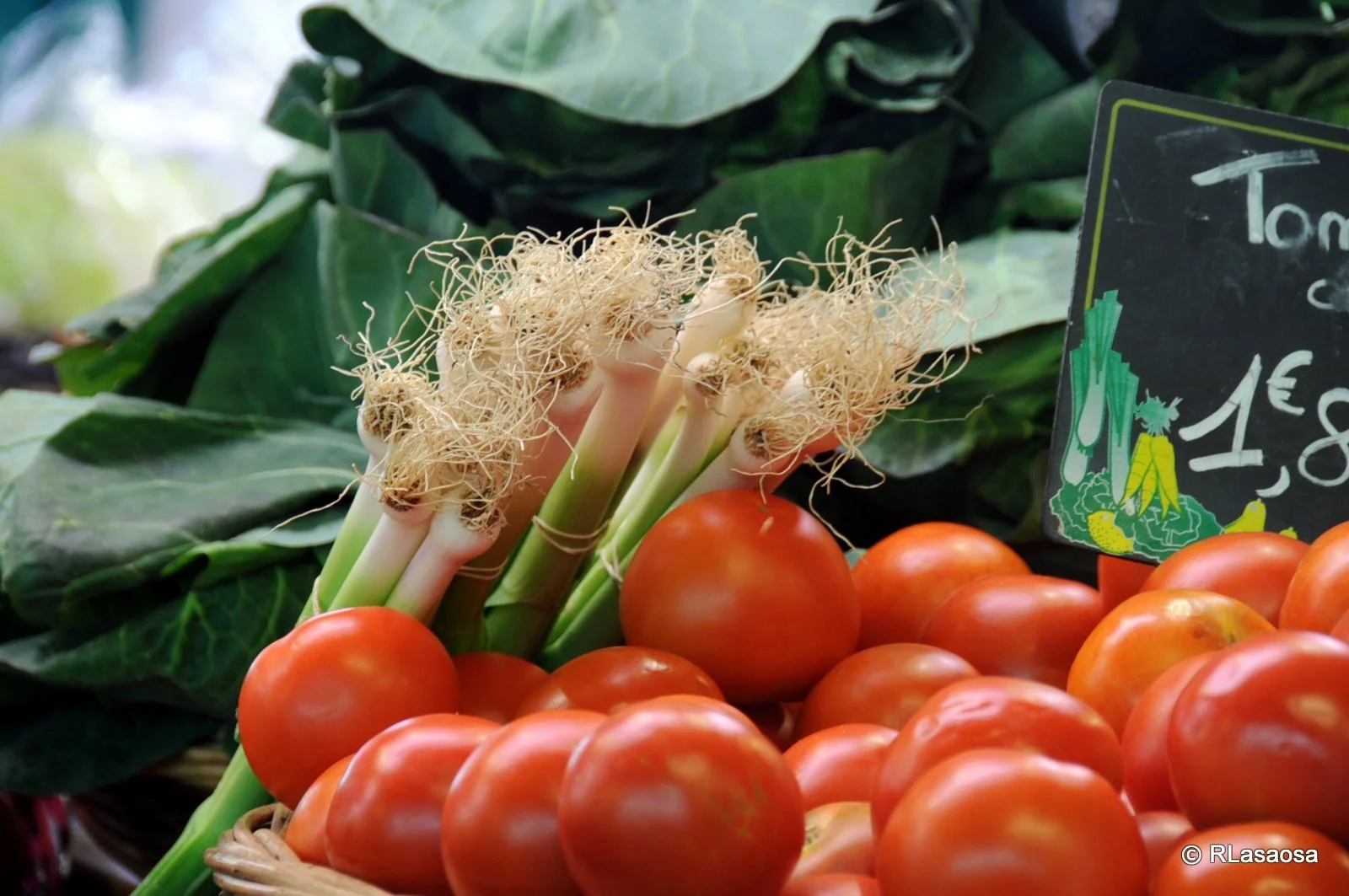
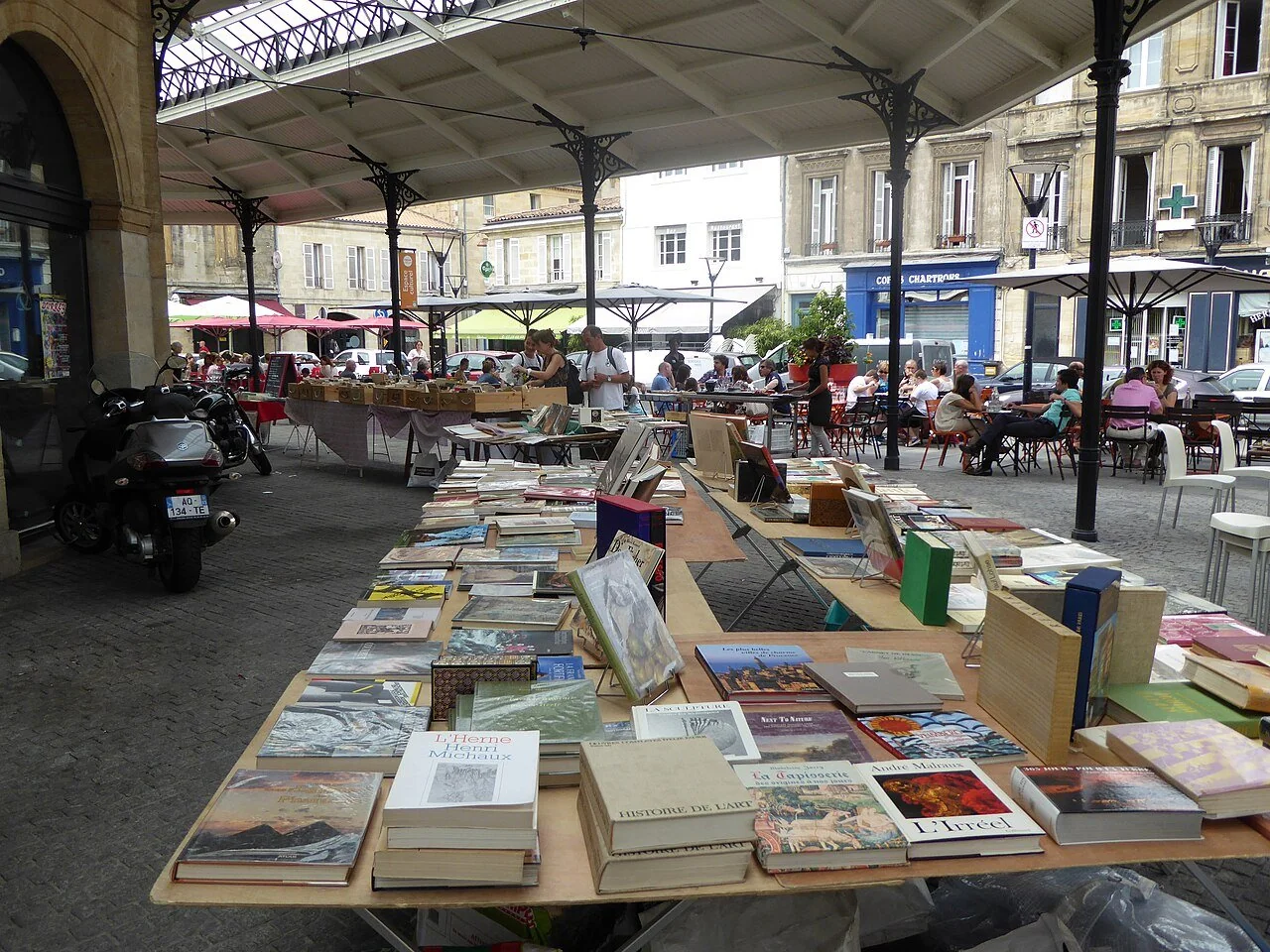
Head south of the centre for the most authentic stop of your trip. The Marché des Capucins, trading since 1749, carries a nickname that says it all: the belly of Bordeaux. Around sixty stalls sell seasonal produce, aged cheeses, southwestern charcuterie and fish, Tuesday to Sunday until early afternoon. Order a dozen Arcachon oysters with a glass of dry white and eat standing, elbow to elbow, the way people here do.
Outside, the Saint-Michel neighborhood keeps that cosmopolitan feel. The basilica raises its free-standing bell tower, the tallest spire in southwestern France at 114 metres. Around it, second-hand dealers, Portuguese grocers, coffee roasters and small shops make up a lively working district, with open-air markets on Saturdays. Walking down towards Place de la Victoire you pass the Aquitaine gate, Porte d'Aquitaine, and the student energy that gives this corner its own life, day and night.
Afternoon: cathedral, Pey Berland tower and Rue Sainte-Catherine
Walk up to Place Pey Berland, the administrative and religious heart of the city of Bordeaux. Saint-André cathedral shows off its gothic architecture, its royal portal from the 13th century and some remarkable stained glass.
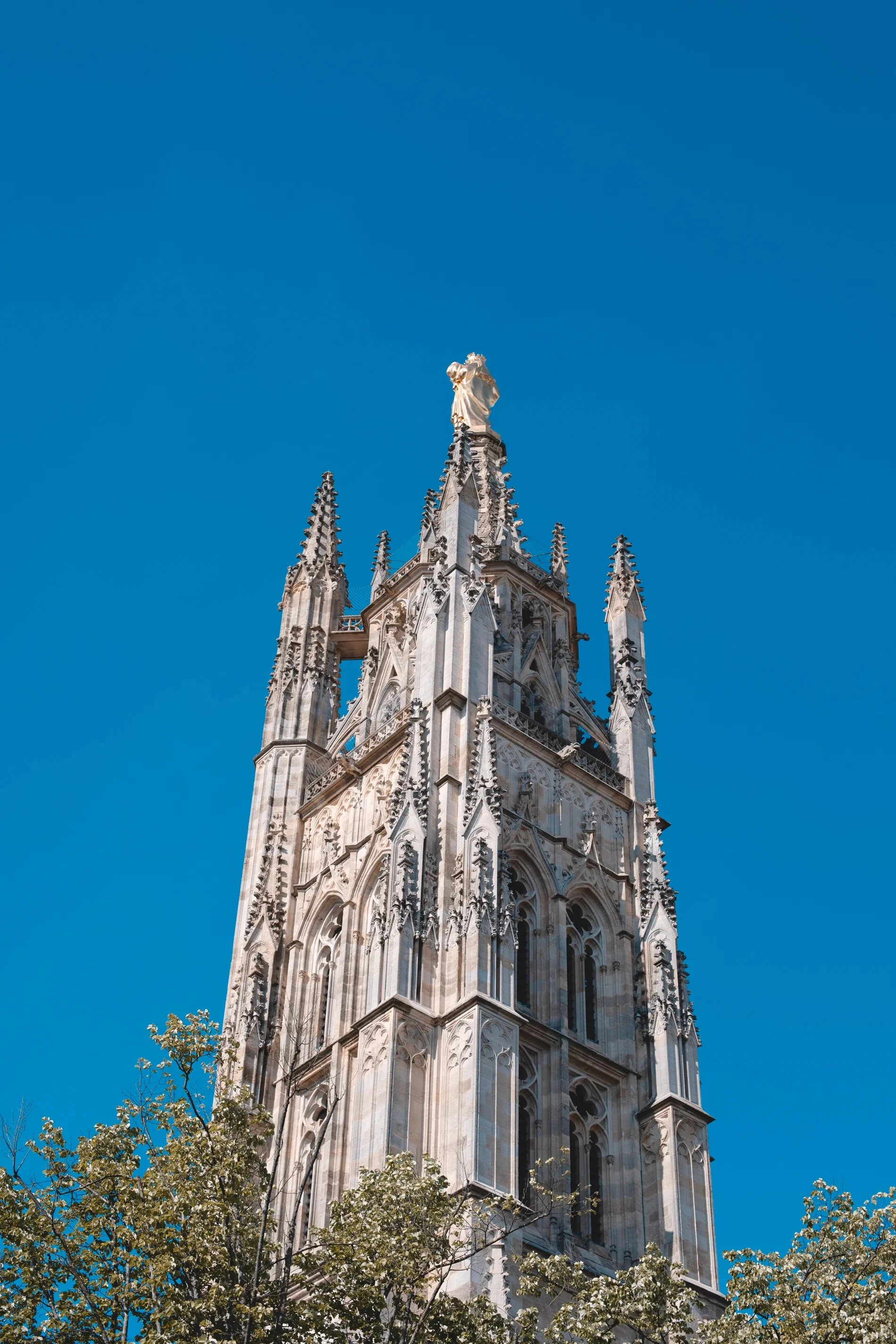
Next door, the bell tower is visited separately. Completed in the 15th century, it is climbed by a spiral staircase of more than two hundred and thirty steps. The effort is real and the reward immediate: a 360-degree panoramic view over the tiled roofs, the Garonne, the spires of the old town and, on a clear day, a good part of the Gironde countryside. Buy your ticket in advance in high season to avoid the queue.
From there, walk into Rue Sainte-Catherine. At 1.2 kilometres of fully pedestrian paving, it is the longest shopping street in Europe. International names at the northern end, smaller independent boutiques as you head south. Halfway down, the Grosse Cloche appears above the rooftops: this belfry of the former town hall, with its two slate-capped towers, holds a bell that rings only a handful of Sundays each year.
Evening: Grand Théâtre, opera and signature cocktails
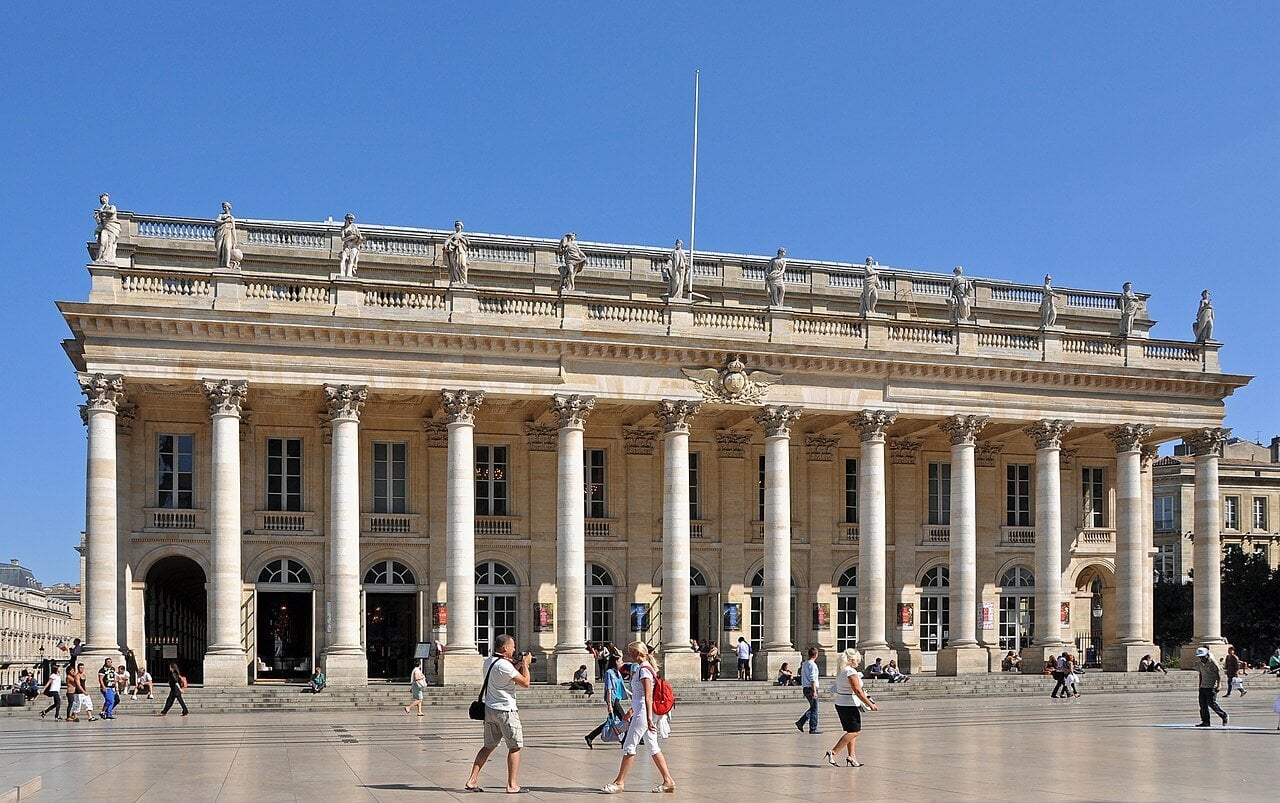
As the day ends, Place de la Comédie comes alive. The Grand Théâtre raises twelve corinthian columns topped with statues, and its interior staircase inspired the one at the Opéra Garnier in Paris. If the Opéra National de Bordeaux programme allows, an evening performance is the finest possible ending to day one. Book from October to April.
For dinner, the restaurants nearby serve generous local cuisine: entrecôte à la bordelaise, lamprey, Pauillac lamb and canelés for dessert, the local pastry you will end up buying twice. A fine dining experience is best reserved several days ahead, especially on Friday and Saturday night.
After the meal, walk back up Rue du Temple: the Casa, the cocktail bar of the Grand Hôtel Français, serves until 00:30. Going to bed means climbing one flight of stairs.
Day 2: Chartrons, Cité du Vin and the right bank
Day two moves away from the historic centre, exploring the Bordeaux of wine, industrial heritage and contemporary art. Chartrons first, Cité du Vin and Bassins des Lumières next, the right bank in the afternoon. Tram lines B and C link the three easily, and a bike is a very pleasant option along the river. The programme suits a couple, a family and a solo traveller equally well.
The four stops of day 2:
• Chartrons: antique dealers, wine bars and the Sunday market
• the wine museum and Bassins des Lumières
• Right bank: Darwin, street art and Quai de Queyries
• Quinconces and Jardin Public to finish
Morning: Chartrons district and the Sunday market
The Chartrons district, located just north of the Grand Théâtre, takes its name from an old Carthusian monastery, but its identity comes from trade. For three centuries, wine merchants filled it with cellars, warehouses and private mansions. Today Rue Notre-Dame lines up antique dealers, brocantes, galleries and small cafés, far from the tourist crowds. This is where you wander most willingly, notebook in hand.
On Sunday morning the Chartrons market takes over the quayside, with producers, oyster farmers and food stalls from around the world. People eat standing, facing the Garonne. The rest of the week, the local cellars offer tasting and advice: this is where you finally understand the difference between a left bank grand cru led by cabernet sauvignon and a right bank wine where merlot takes over. Winemakers regularly run workshops here, an easy way to learn about blending without leaving town.
Do not miss the CAPC contemporary art museum, housed in the former Entrepôt Lainé. This brick vessel, with its nave and walkways, is worth visiting for the architecture as much as for the exhibition. Entry to the permanent collection is free for under-18s, which makes it an easy stop with children. The Musée des Beaux-Arts, further south, rounds out the morning for lovers of older painting.
Midday: Cité du Vin and Bassins des Lumières
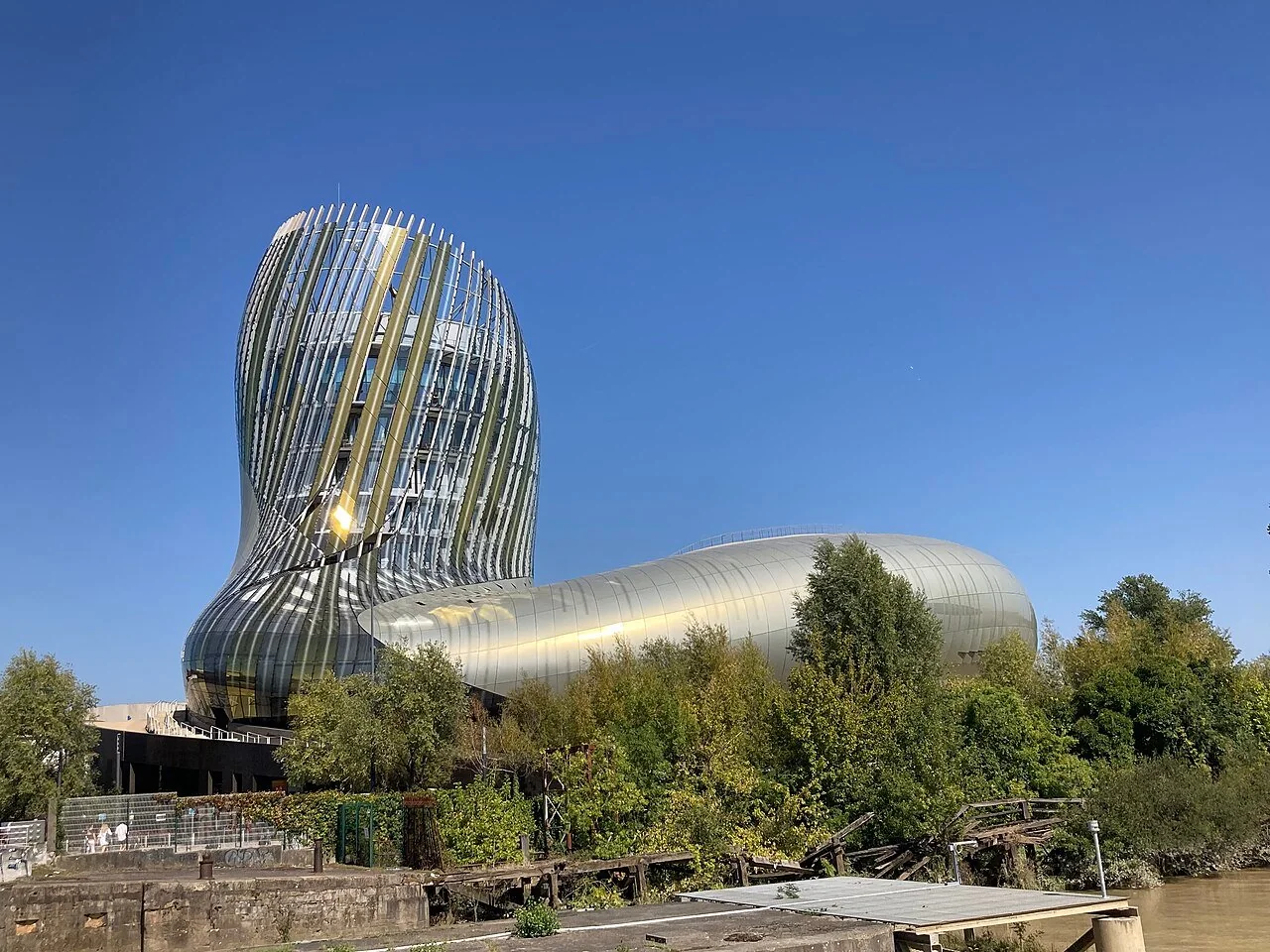
You cannot visit Bordeaux in 2 days without giving wine its proper place. Opened in 2016 north of the Chartrons, the Cité du Vin is recognisable from a distance by its golden aluminium silhouette, meant to suggest wine swirling in a glass. The permanent tour is digital and sensory: interactive maps, aroma workshops, films on vineyards worldwide. Allow two to three hours. The visit ends at the belvedere, some thirty metres up, with a tasting and a stunning view over the Garonne and the Chaban-Delmas bridge.
One tram stop away, the wartime submarine base holds the Bassins des Lumières, the largest digital art centre in the world since it opened in 2020. Concrete pens built during the Second World War become screens for immersive exhibitions projected onto the walls and mirrored in the water. The programme changes each year and the experience is genuinely spectacular.
Good to know: reception at the Grand Hôtel Français offers a reduced rate for the Bassins des Lumières, booked directly at the desk. One less ticket queue.
Afternoon: right bank, Darwin and Pont de Pierre
Cross the Pont de Pierre on foot to reach the right bank. The view from the middle of the bridge justifies the walk on its own. On the far side, Quai de Queyries opens a clear perspective back onto old Bordeaux, particularly beautiful at sunset when the stone turns ochre.
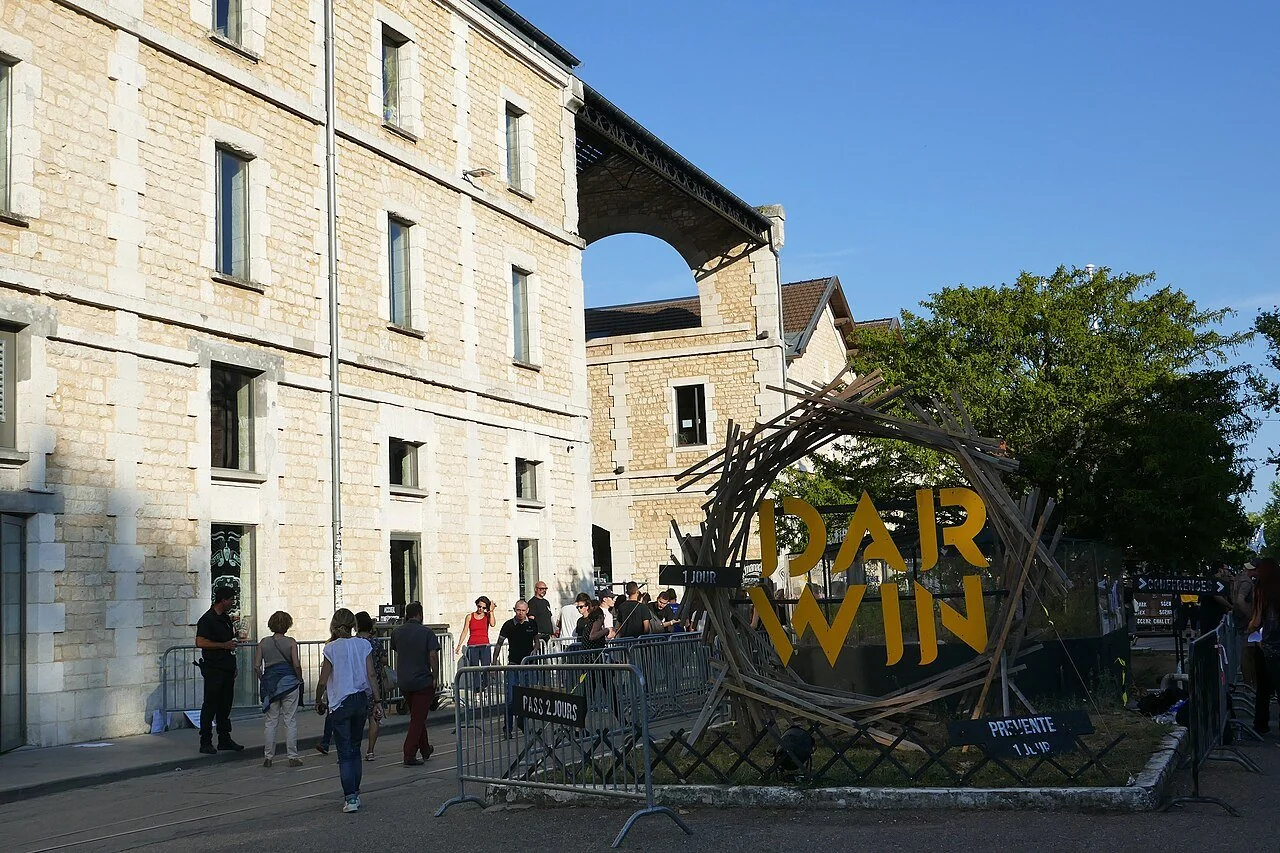
Darwin occupies the former Niel barracks at 87 Quai des Queyries. This alternative site brings together an indoor skatepark, walls covered in street art, an 800 m² Emmaüs second-hand space, a bookshop and the Magasin Général, a huge organic bistro run like a communal canteen. It is a favorite weekend spot for locals, and one of the best places in town for a relaxed lunch or brunch.
The Jardin Botanique de la Bastide next door is a free green pause before you head back. Tram A, Stalingrad stop, returns you to the city center in minutes.
Late afternoon: Place des Quinconces and Jardin Public
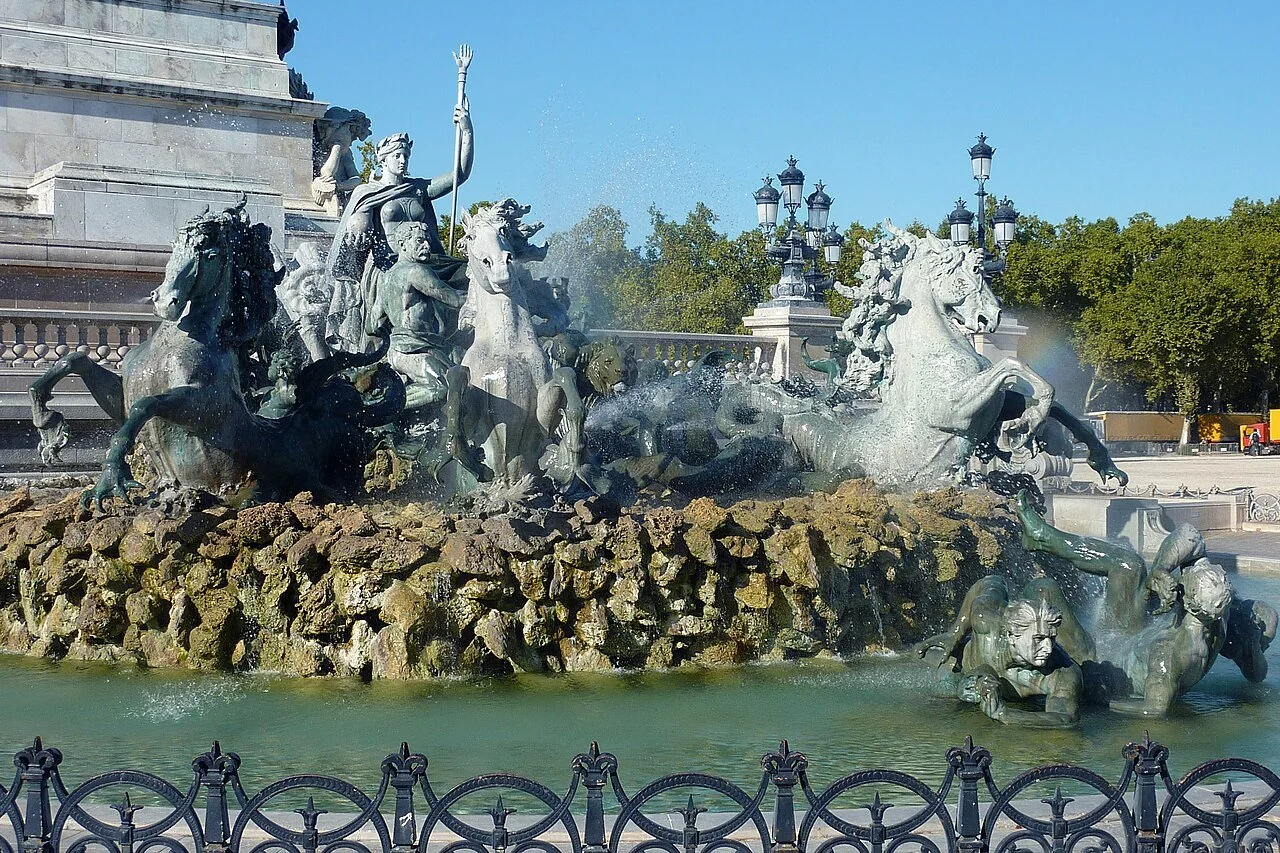
Finish at Place des Quinconces, one of the largest squares in Europe at twelve hectares. Do not miss the Monument aux Girondins, raised in memory of the deputies executed during the French Revolution, with its bronze horses bursting from the basins. To the west, Allées de Tourny lead towards the big terraces and the shops.
A few minutes on foot bring you to the Jardin Public. Lawns, ponds, a botanical garden and a puppet theatre make it the best place in the city centre to sit down before dinner. One last glass on a terrace, and your weekend in Bordeaux closes gently.
Where to stay to visit Bordeaux in 2 days
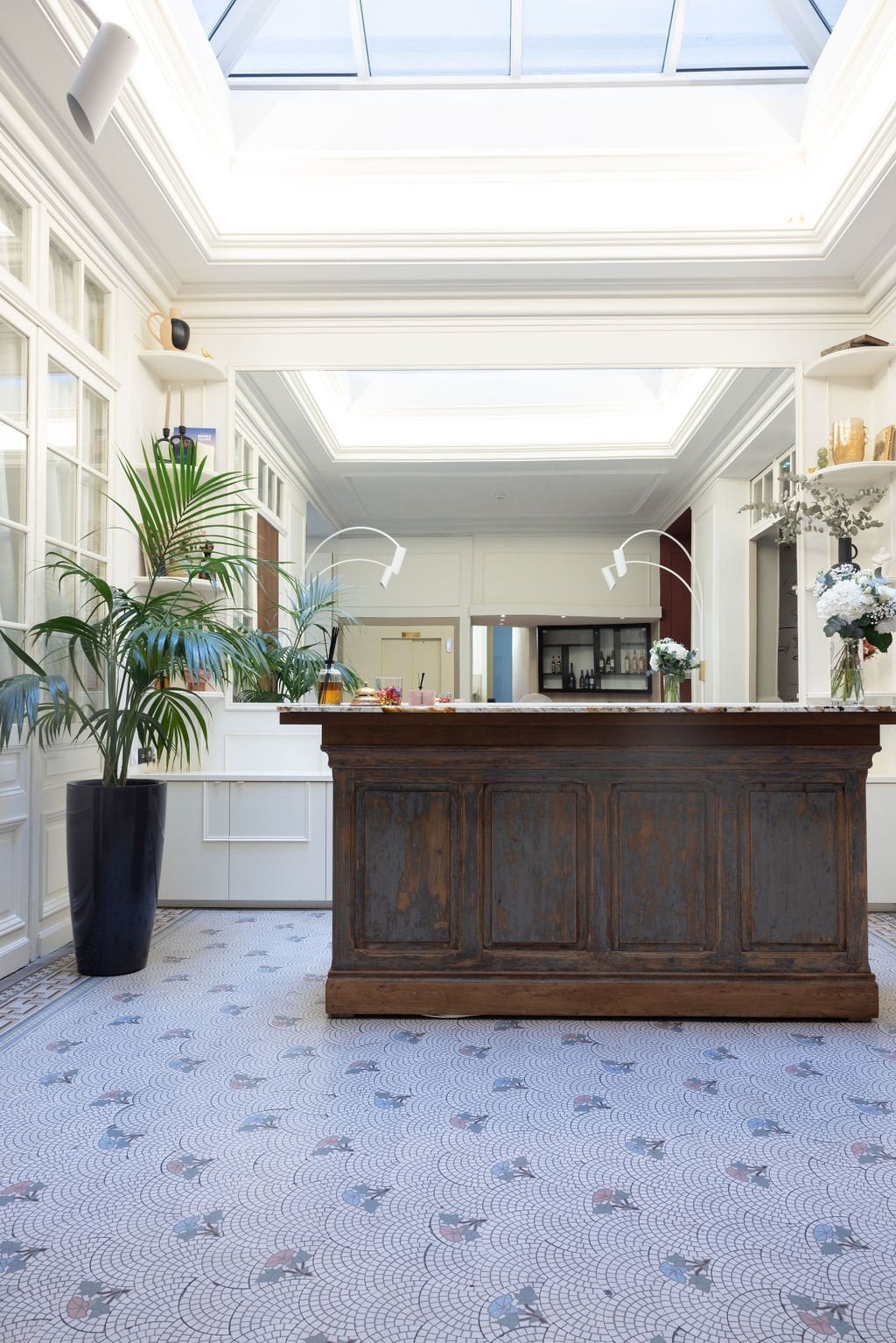
Two days cover a lot of ground, so your accommodation makes or breaks the weekend: every pointless journey eats into your visiting time. The Grand Hôtel Français, a 3-star boutique hotel located at 12 Rue du Temple, occupies a fully restored 18th century townhouse a few minutes on foot from the Grand Théâtre, Place Gambetta and the main shopping streets. From the front door, the whole of day one happens without transport.
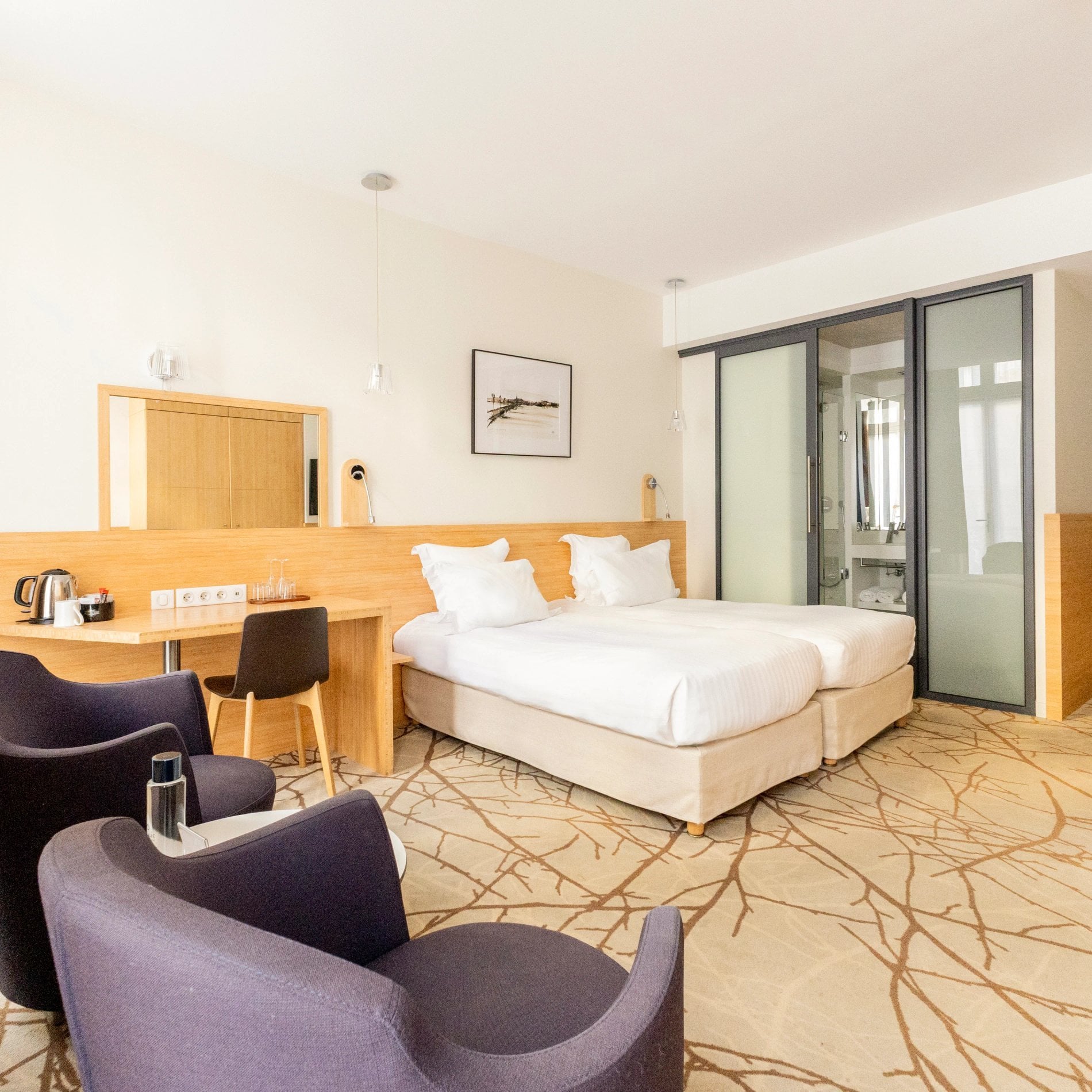
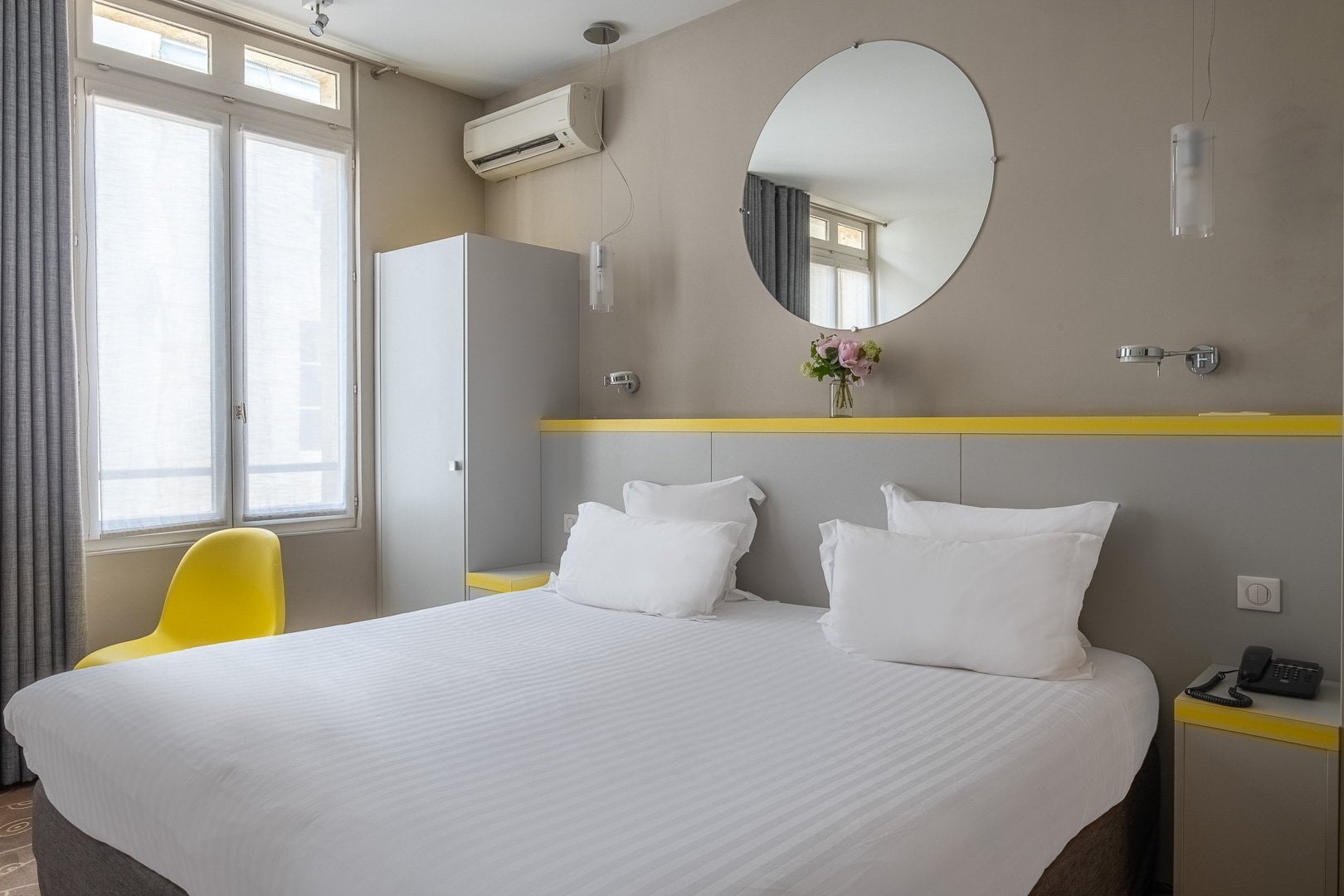
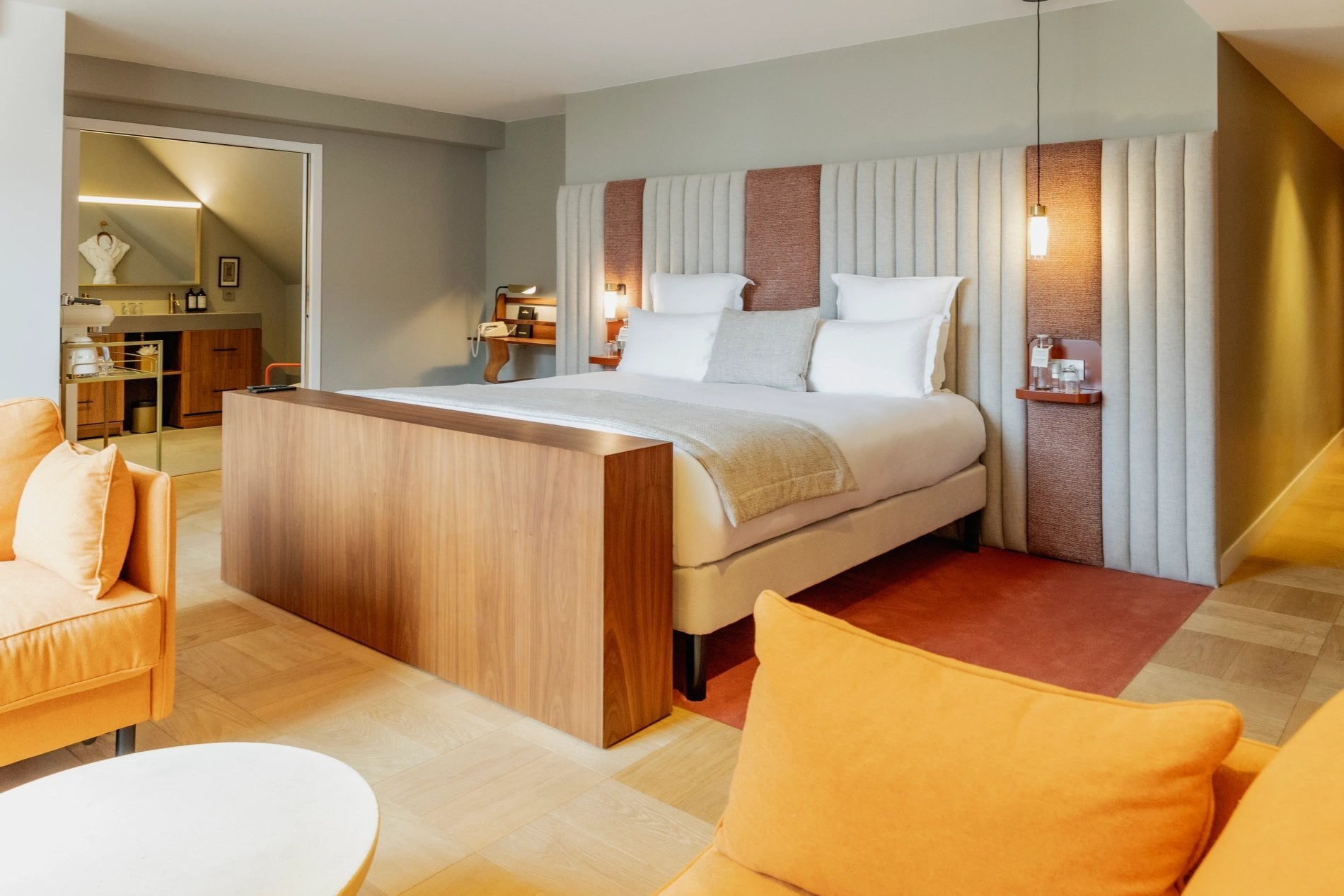
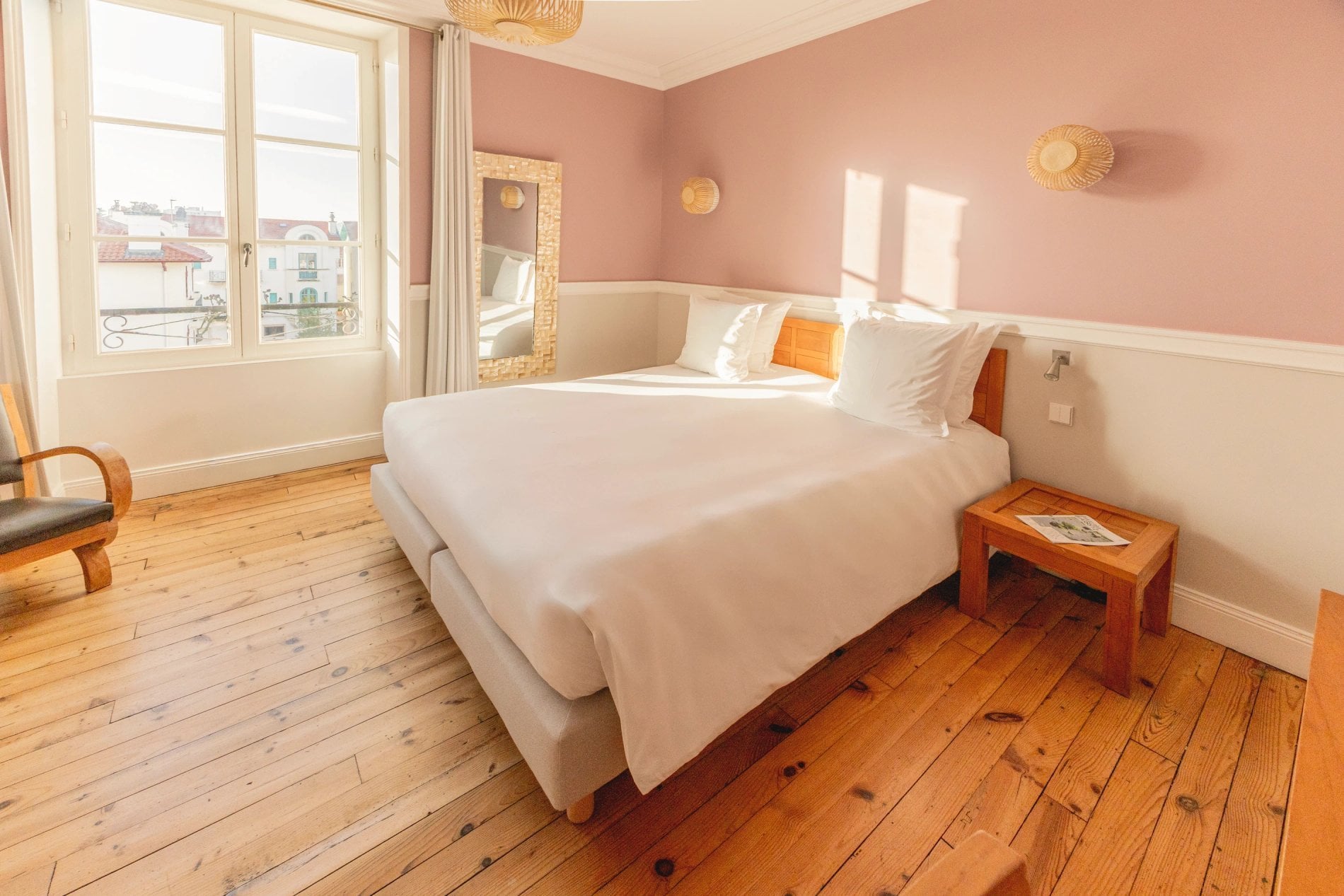
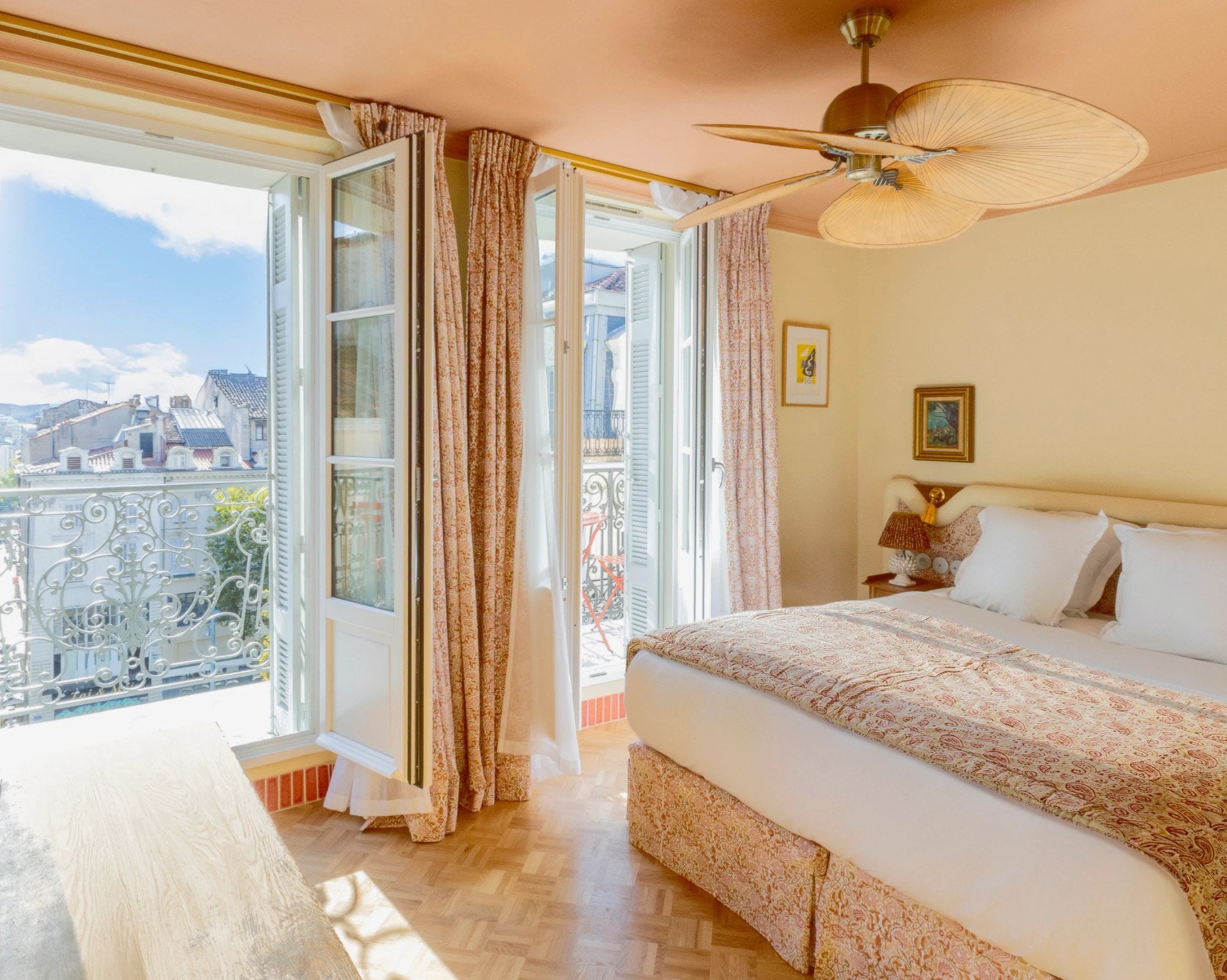
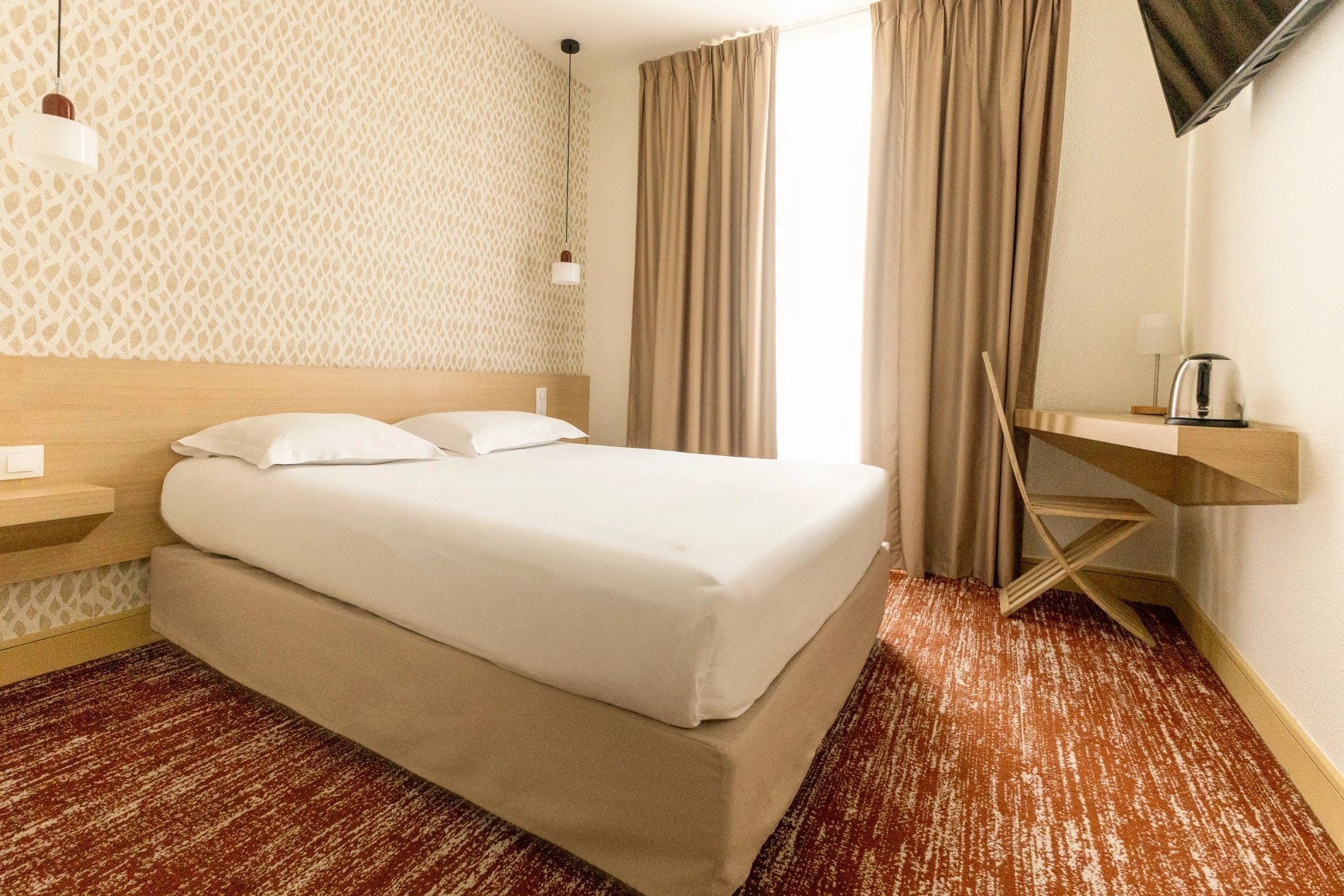
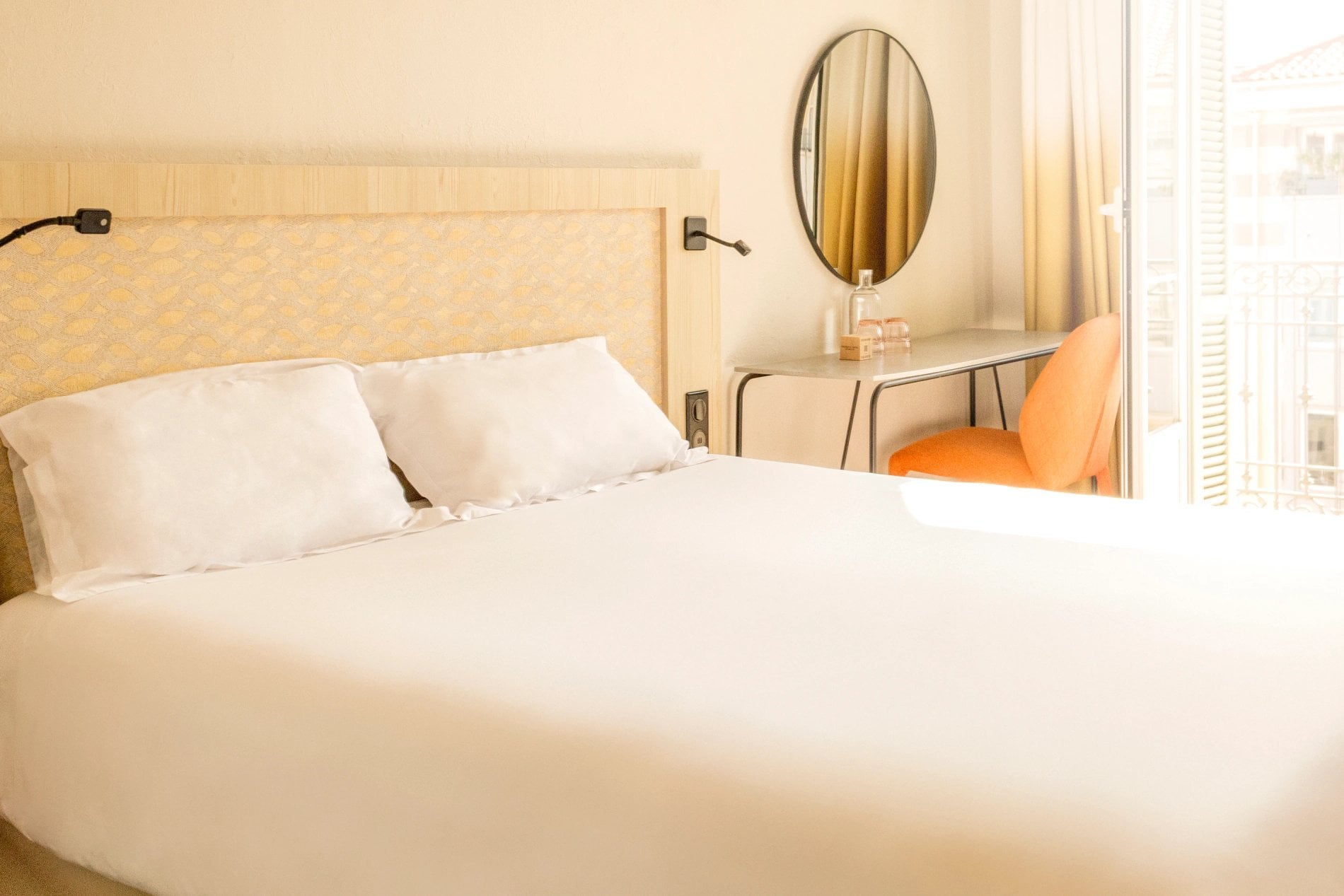
The house has 35 rooms in six categories: Comfort, Superior and Superior with balcony, Deluxe and Deluxe with balcony, plus a ground floor room with disabled access. Each one pairs the character of the old building, high ceilings and listed facade, with contemporary comfort:
- air conditioning and free wifi in every room
- private bathroom and flat-screen television
- Palace-quality mattresses and Edona quilts
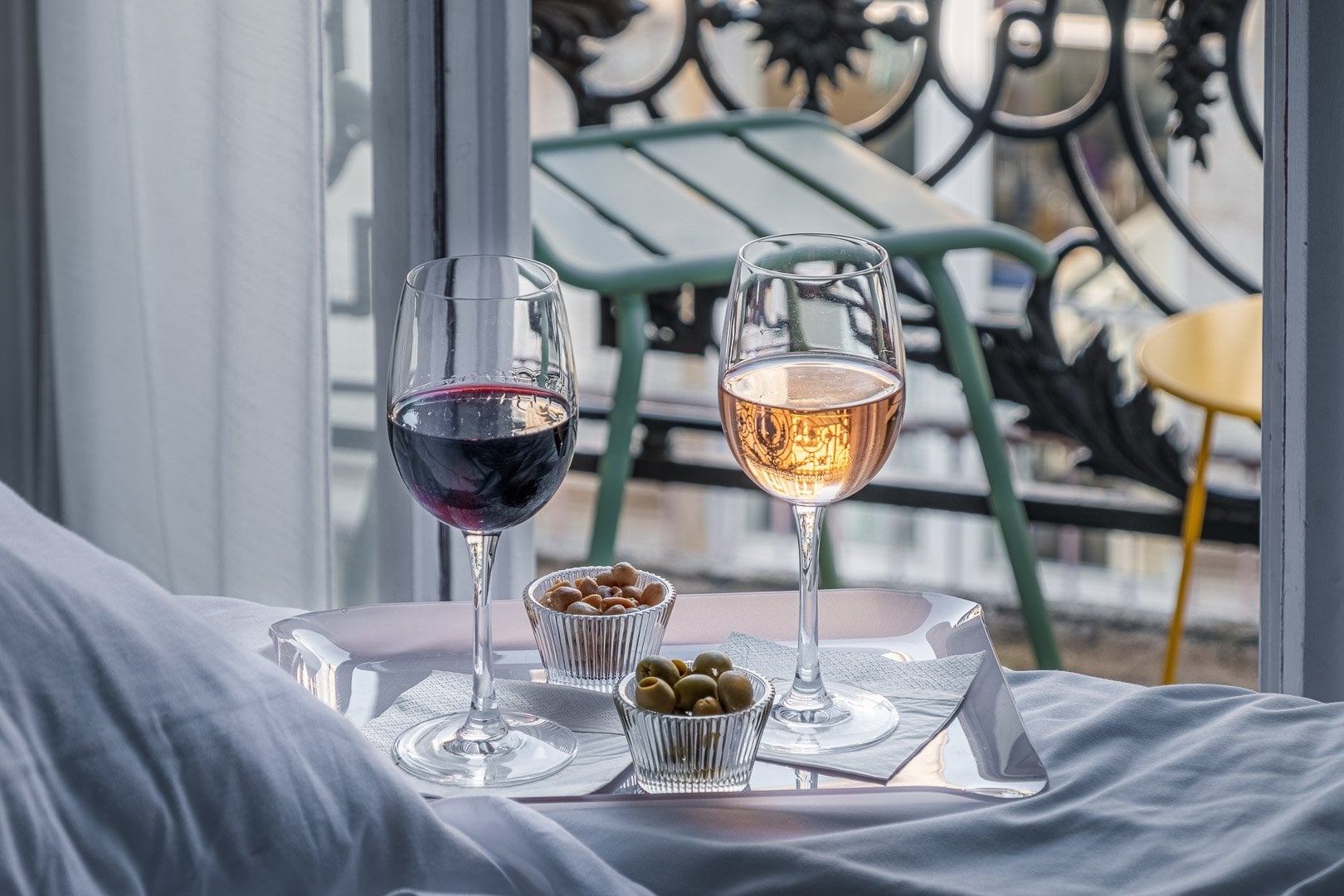
- a balcony over the street in selected rooms, ideal for morning coffee
Families will find rooms for up to three people, with a cot on request. A lift serves every floor and the building is accessible to guests with reduced mobility. Pets are welcome for a supplement. For a weekend as a couple or a family break, this charming address keeps the quiet of a private townhouse despite its central location.
Booking direct on the official website gives access to exclusive offers of up to 12% off, with best price guarantee, live availability and secure payment.
Services, concierge and signature cocktails
A two-day stay is decided by practical details, and this is where the support makes the difference.
Organic breakfast and southwestern produce
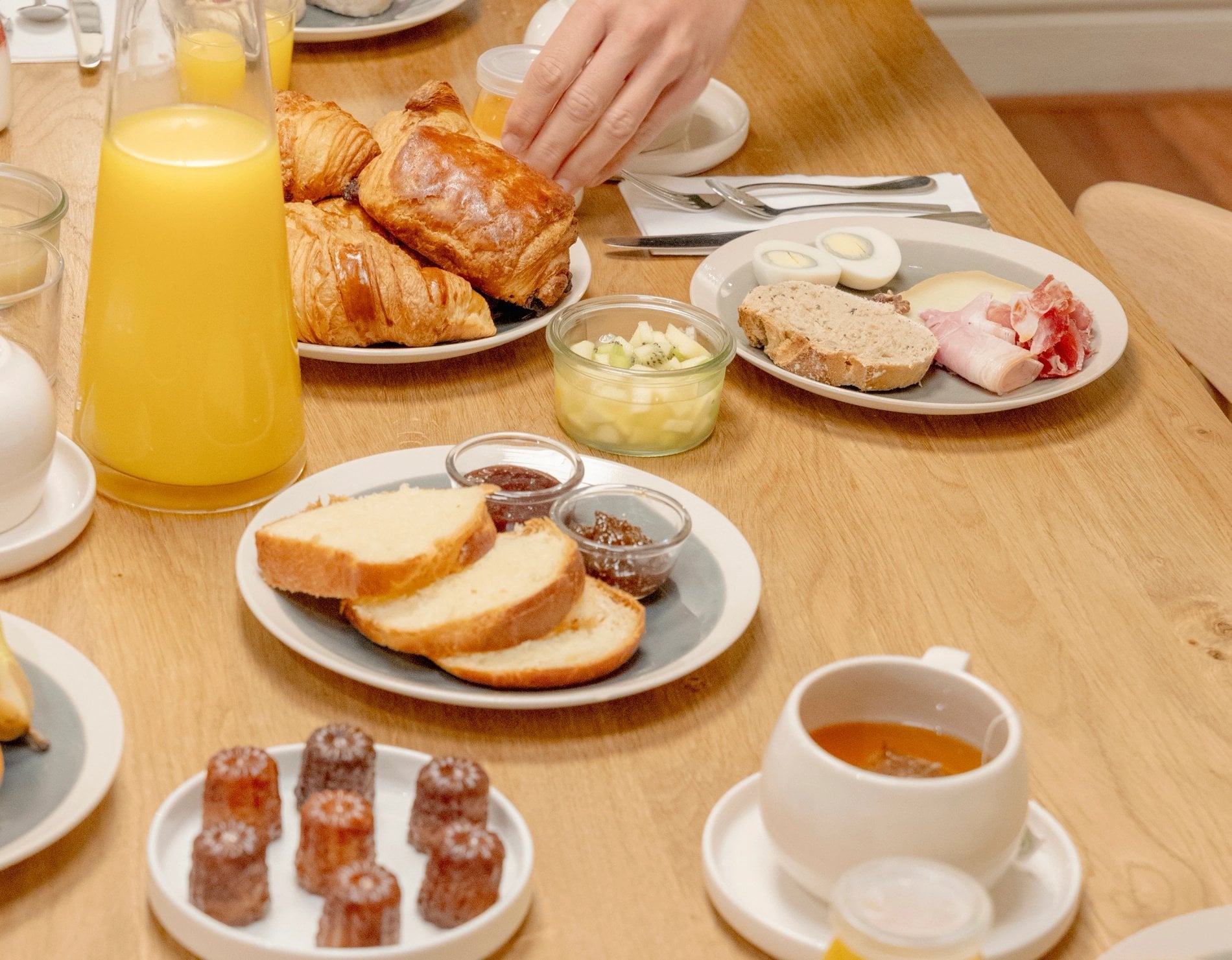
The buffet breakfast, served from 6:30 to 10:30, is built on organic, local and seasonal produce from short supply chains. Pastries, fresh fruit, southwestern charcuterie, cheeses and pressed juices make a solid start before a day of walking. The cost is €18 per adult, €9 for ages 6 to 11, free under 5. It holds the Ocean Friendly Restaurant certification from Surfrider Europe, alongside the Green Key ecolabel held by the house, a rare commitment for a hotel in the city centre.
The Casa, signature cocktails
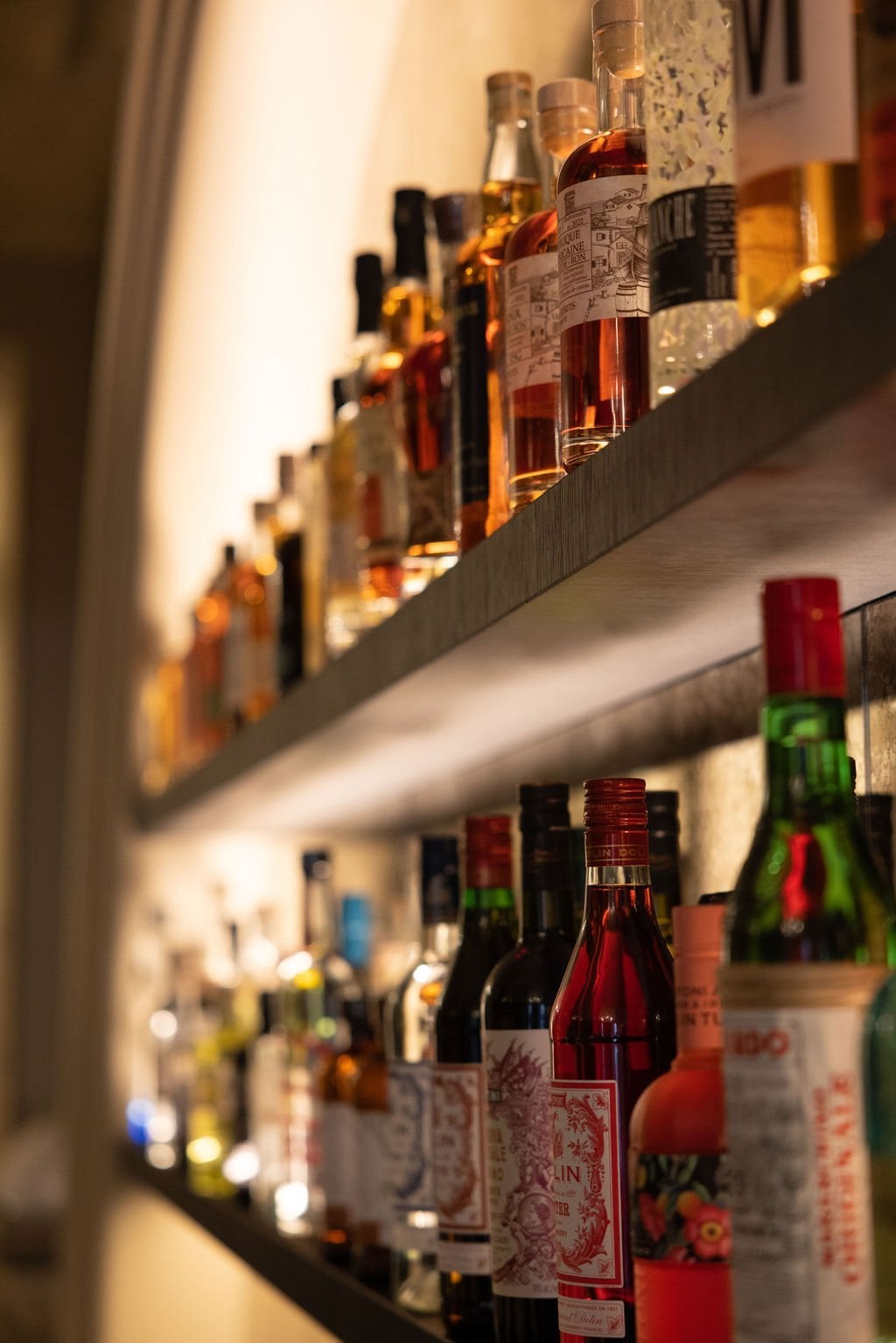
Set on the ground floor of the house, the Casa deserves a full evening. Open daily from 18:00 to 00:30, it serves a signature menu created with Jérémy Lauilhé, Meilleur Ouvrier de France Barman, with alcohol-free options as carefully built as the classics. Murals by Bordeaux artist Emma Kadroui and the illustrated menus, refreshed each season, give the room an identity you will not find elsewhere in the neighborhood. Guests come down like neighbours, no booking needed.
Concierge and tailor-made planning
Reception doubles as a concierge desk: restaurant booking, theatre tickets, transfers, recommendations. The team can arrange a guided walking tour with an English-speaking guide, a tasting workshop or a trip into the vineyards depending on what you feel like. For a first visit or a return, it is the fastest shortcut to the city locals actually use, and the surest way to build a proper local experience.
Wellbeing, seminars and workspace
For wellbeing, the house works with the Soin de Soi institute a few minutes away, at a preferential rate arranged at reception.
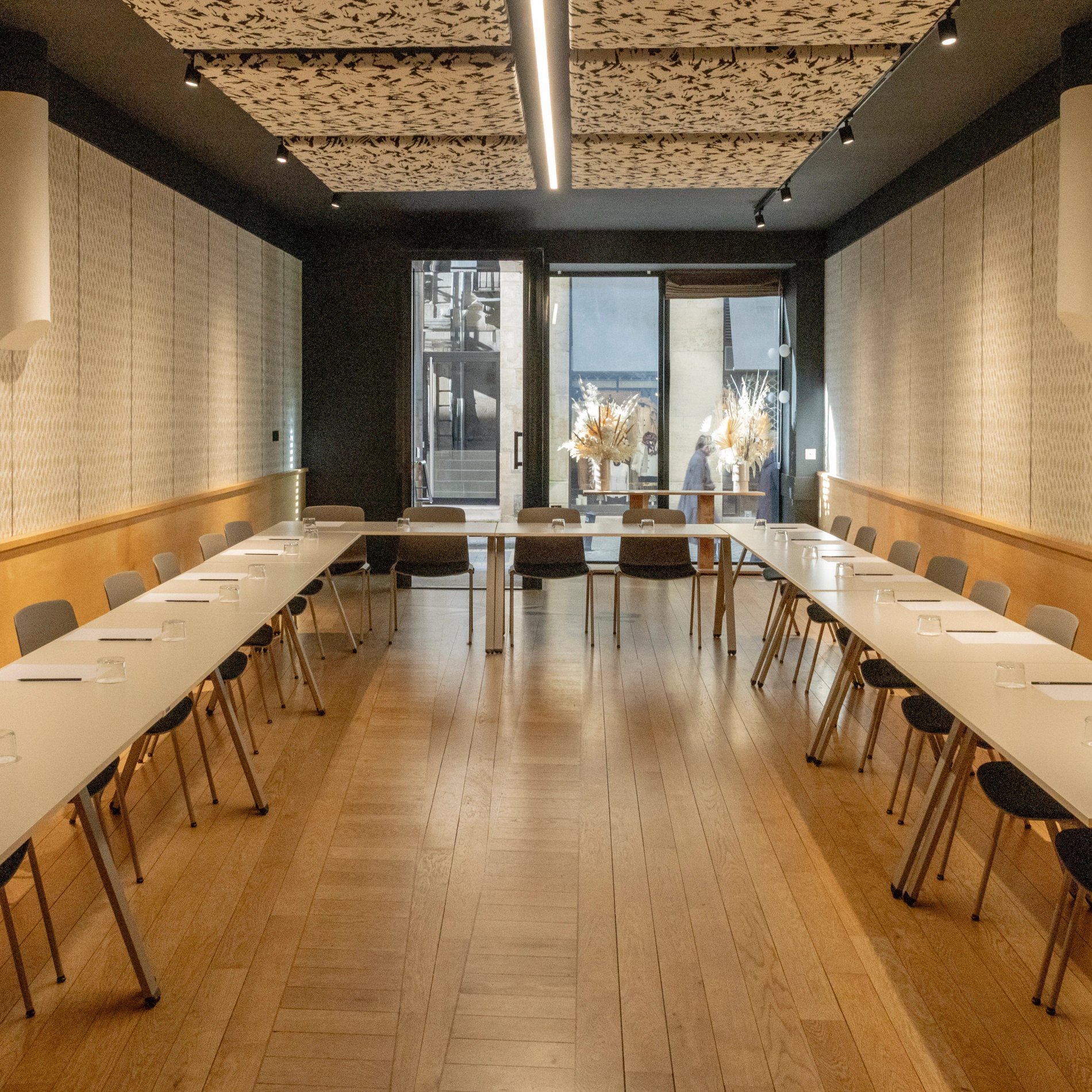
On the professional side, two modular rooms host meetings, seminars and private events: Salon Merlot for up to 20 people and Salon Malbec for up to 40. A workspace is available during the day for business travellers.
Day trips: wine region, Saint-Émilion and Arcachon Bay
Have half a day extra, or want to swap part of the programme for a day trip? The Gironde is made for it.
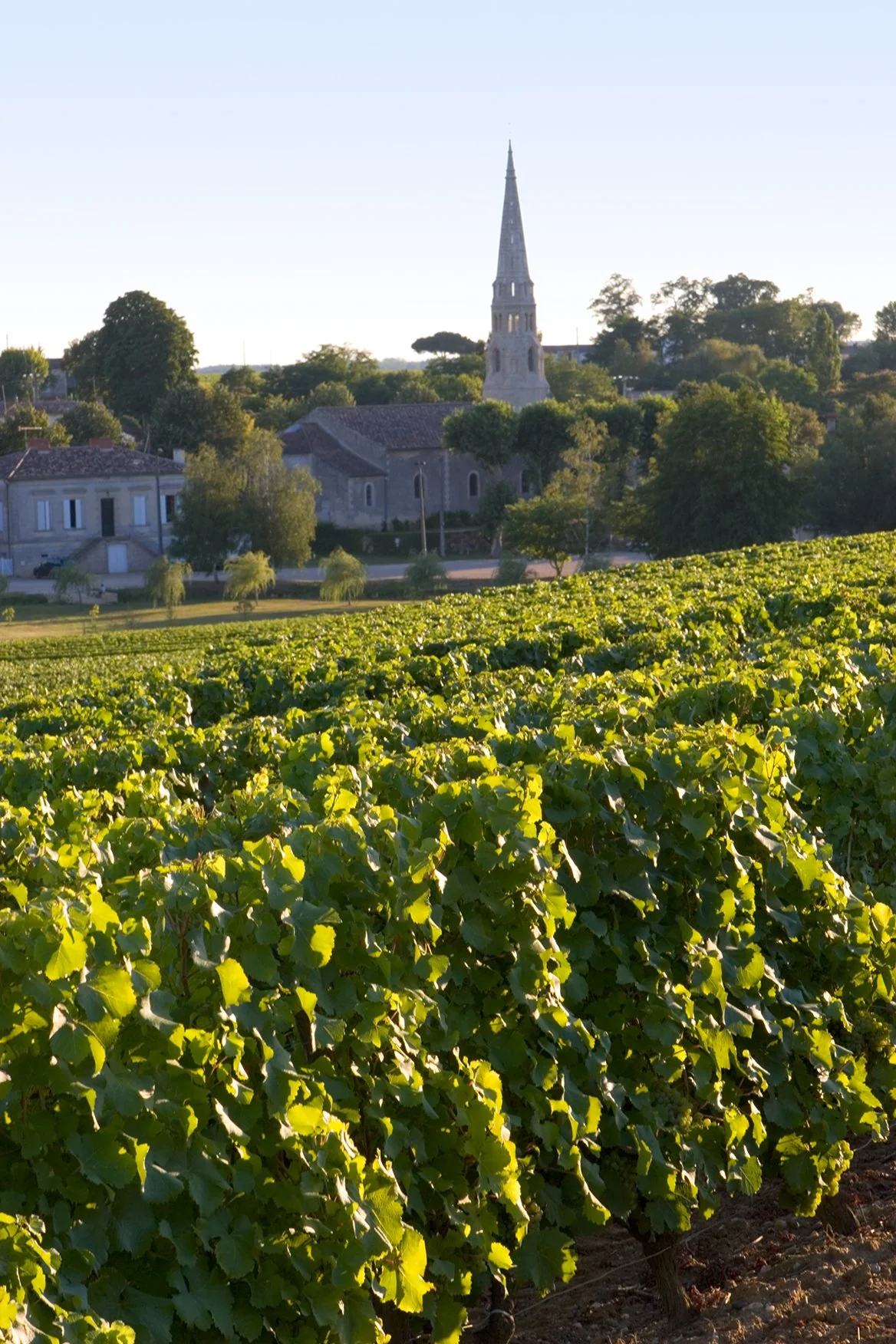
Saint-Émilion sits around forty kilometres away, reachable by car or by train from the main station. The medieval village, UNESCO listed, is visited for its monolithic church carved into the rock, its steep lanes and its châteaux open for tasting. Winemakers welcome visitors for workshops and explain grape varieties and blending in plain language. Half a day is enough to get the feel of it.
To the northwest, the Médoc château route lines up the grand cru classé estates along the D2. Margaux, Pauillac and Listrac: these wineries need booking in advance, often several days ahead in high season. To skip the logistics, reception works with Olala Bordeaux, a partner running the full wine tour, with 10% off for guests booking at the desk.
The other option is Arcachon Bay, southwest of the Gironde, about an hour away by road or rail. Oyster huts at Cap Ferret, oysters eaten facing the sea and the climb up the Dune du Pilat, the tallest in Europe at around 110 metres, fill a whole day. The panorama from the top, ocean on one side and pine forest on the other, is worth the effort: bring good shoes and water. It is also the favorite outing for families with children, and one of the most famous views in the region.
Practical tips for a perfect weekend in Bordeaux
Getting to Bordeaux
The TGV connects Paris to Bordeaux Saint-Jean train station in a little over two hours, travel time included, with direct services from Toulouse, Marseille, Montpellier and Provence. Bordeaux Mérignac airport is about twenty minutes from the centre. Traveling by train remains the simplest option, since the station links to the city centre on tram C. If you are renting a car, plan where to park, as the historic centre is largely pedestrian: a secure car park sits 300 metres from Rue du Temple, at a preferential rate for hotel guests.
Getting around the city
The TBM network combines four tram lines, buses and river shuttles. Three lines cover most of what you need:
• line B: Chartrons and the wine museum
• line A: right bank and Darwin
• line C: quays and the main station
Bike rental and the riverside cycle paths complete the picture. Over two days, though, most of the ground is covered on foot.
The Bordeaux City Pass
The Bordeaux Métropole City Pass comes in 24, 48 or 72-hour formats and it includes unlimited public transport, entry to a selection of museums and monuments, and a guided tour. It pays for itself as soon as you visit two or three paying sites in the same day, and it is a good way to keep the cost of a culture-heavy weekend under control.
Best time to visit Bordeaux
April, May, June and September offer the best weather and the smallest crowds: clear light, open terraces, manageable queues. July and August are hot, sometimes heavy, but the city lives outdoors until late. Fall brings the harvest, the ideal time to visit a wine estate at work, and October and November stay mild enough for long walks.
Booking in advance
Central restaurants fill up on Friday and Saturday, château visits sell out quickly, and museum tickets are best bought online. The same applies to your room: the Grand Hôtel Français is in high demand from April to October and is best reserved several weeks ahead. Going through the official website gets you the lowest price and flexible cancellation, with no middleman.
Two days are not enough to exhaust Bordeaux, and that is exactly what makes the trip work: you leave with a list for next time. Between the pale stone of the historic centre, the reflection in the miroir d'eau, the smell of iodine in the market halls and one last cocktail on Rue du Temple, a visit to Bordeaux in 2 days leaves the memory of a city best travelled on foot.
Frequently asked questions about visiting Bordeaux in 2 days
Is 2 days enough to visit Bordeaux?
Two days cover the essentials: the historic centre, Place de la Bourse and its mirror, the shopping streets, the Chartrons, the wine museum and the right bank. If you want to add the wine region of the Gironde or Arcachon Bay, plan a third day.
What are the must-see spots in Bordeaux?
The sites not to miss:
• Place de la Bourse and the miroir d'eau
• the Grand Théâtre and the Jardin Public
• the cathedral and the Pey Berland tower
• the Grosse Cloche and the basilica bell tower
• the Marché des Capucins and the Chartrons district
• the wine museum, Bassins des Lumières and Pont de Pierre
Do you need a car to visit Bordeaux?
No. The historic center is walkable and the tram reaches the further neighborhoods such as Chartrons or the right bank. A bike is the easiest way to follow the river. Renting a car only becomes useful for a day trip to the Médoc, Saint-Émilion or Arcachon.
Which neighborhood should you stay in for a weekend in Bordeaux?
The triangle formed by the Grand Théâtre, Place Gambetta and the quays is the most practical choice: everything is a few minutes away, the evening atmosphere is lively and restaurants are everywhere. The Grand Hôtel Français on Rue du Temple lets you enjoy the city without ever taking the tram.
When is the best time to visit Bordeaux?
April to June and September bring pleasant weather and moderate crowds. In summer, life moves outdoors until late. From Paris, Toulouse, Avignon or anywhere else in France, the TGV makes a weekend trip easy, including off season, and spring and fall are highly recommended.
Where can you taste Bordeaux wine on a short trip?
The Cité du Vin includes a guided tasting at the belvedere, with the whole history of the vineyards along the way. The wine bars and cellars of the Chartrons offer personal recommendations and a strong local list. To visit a château, allow half a day towards Saint-Émilion or the Médoc.
Where can you find an authentic experience in Bordeaux?
The big covered market in the centre is the most authentic spot in town: oysters, a glass of white and southwestern dishes in a real, noisy crowd. Darwin, on the right bank, has the same authentic energy. A beautiful memory to share when you get home.
What are the top things to do in Bordeaux in 2 days?
The top things to do split neatly across two days. Day one covers the historic monuments: the iconic square at Place de la Bourse, the gothic cathedral and its bell tower, the Grosse Cloche and the covered market, with restaurants all around for lunch. Day two belongs to wine, the Chartrons and the right bank. Add one museum, one tasting and one long walk beside the river and you have a perfect weekend, whatever the season. Keep one slot free for something unplanned, because the best memories of a city break rarely come from a list.
Where are the best local food spots in Bordeaux?
The local food spots worth your time are easy to remember. The covered market for oysters and dry white wine, the bistros around Place du Parlement for traditional French cooking, and the Chartrons for wine bars and small plates. Restaurants in the heart of Bordeaux fill up fast, so pick your restaurant and book ahead. For dessert, buy a canelé at a bakery rather than a supermarket, and check out the pastry shops for a variety of local specialities.
How do you get from Paris to Bordeaux?
The train is the simplest option: TGV services run from Paris Montparnasse to Bordeaux Saint-Jean in a little over two hours, and you step out in the Bordeaux city centre rather than at an airport. Flights land at Mérignac airport, around twenty minutes away. Car rental is only worth it if you want to explore the wine region, since the centre is easily covered on foot.
Is Bordeaux a good French city for a first trip?
Bordeaux is a French city built for short breaks. It is compact, walkable, famous for its stunning architecture from the 18th century, and far less crowded than Paris. Two days in Bordeaux give you monuments, museums, markets and vineyards without spending hours in transport. Most visitors discover Bordeaux over a weekend and enjoy it enough to plan a longer return.
How much does a weekend in Bordeaux cost?
Accommodation is the main line of any budget, and a boutique room in the centre stays well below Paris prices for an equally central location. Meals, museum entries and a bordeaux wine tour make up the rest, and the City Pass pays off if you are spending a lot on monuments. Travelling in spring or autumn costs a bit less, though the evenings turn cool.
Is a day trip to Saint-Émilion worth it?
Yes, if wine interests you at all. A trip to Saint-Émilion takes around forty minutes by train or by car, and the village is a UNESCO site in its own right. You get a monolithic church, steep cobbled lanes and estates that welcome visitors for tasting. Book a table for lunch in the village and avoid turning up without a plan in high season, when the lanes get busy. Trains leave regularly from the main station, so you do not need a car for this one.