What to See in Bordeaux in One Day:
The Perfect Itinerary
Wondering what to see in Bordeaux in one day when time is short? Far more than you would expect, provided you follow a well-built route. In 24 hours you can admire Place de la Bourse and its water mirror, follow the Garonne river quays, get lost in the Saint-Pierre district, climb the Pey Berland bell tower beside Cathédrale Saint-André, stroll Rue Sainte-Catherine and finish in the Chartrons or at the Cité du Vin. This Bordeaux city itinerary is designed to be walked, from first light to late evening, with the main landmarks, a lunch of local specialties, a glass of wine and the practical tips that save you time. From the Grand Hôtel Français on Rue du Temple, the whole loop happens without transport.
The perfect one day in Bordeaux itinerary
Bordeaux is dense, flat and compact, which is exactly what makes a single visit realistic. The historic center, listed as UNESCO World Heritage since 2007 under the name port of the Moon, fits inside a fifteen-minute triangle between Place Gambetta, the riverfront and the cathedral. The city of Bordeaux counts more than three hundred and fifty protected monuments, a rich history for a place of this size, and the stunning architecture of this French city carries it lightly.
The route below forms a loop. It alternates heritage, food and a green pause, and it flexes with your pace, whether you travel as a couple, solo or with children. Everything on this list of things to see and do in Bordeaux sits within a thirty-minute radius, and nothing here needs a car.
Here are the highlights, in order:
- Morning: Place de la Bourse, the miroir d'eau and the Garonne quays
- Late morning: medieval streets, Porte Cailhau and the Grosse Cloche
- Lunch: Marché des Capucins and southwestern dishes
- Afternoon: cathedral, bell tower and the longest shopping street in Europe
- Late afternoon: Chartrons, Cité du Vin or the right bank
- Evening: Grand Théâtre, dinner and a signature cocktail
Morning: Place de la Bourse, water mirror and the Garonne river
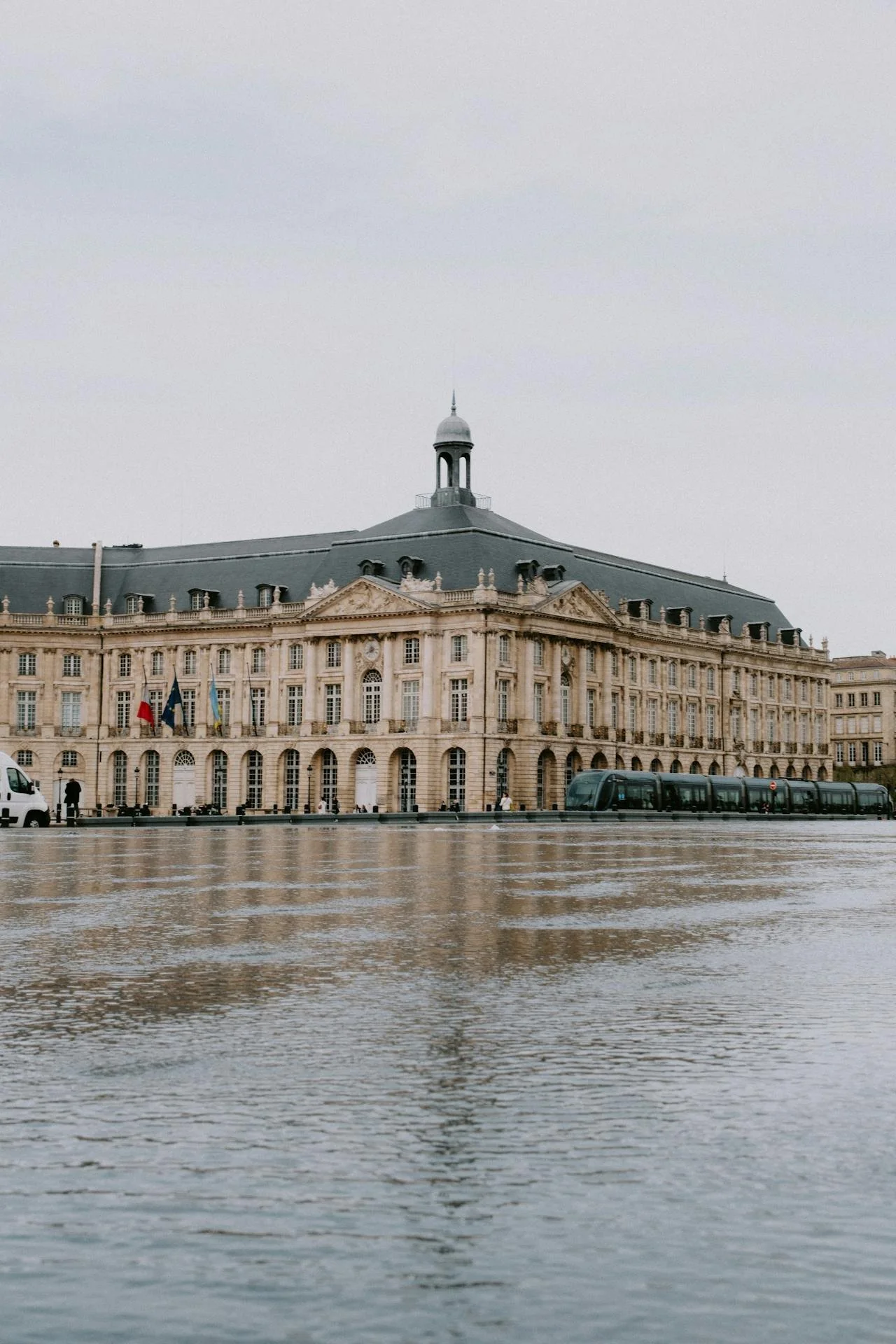
The first monument of the route is also the most photographed in the city. Place de la Bourse, raised between 1730 and 1775 to plans by Ange-Jacques Gabriel, opens old Bordeaux onto the river. The Palais de la Bourse and the former customs building frame the Three Graces fountain, witnesses to an 18th century when the port grew rich on maritime trade, all in pure classical style. This is the iconic square you have seen on every postcard.
Facing it, the water mirror spreads 3,450 m² of polished granite. The cycle alternates a thin film of mist with a perfectly flat sheet every few minutes. For the photo, wait until the mist clears: the surface goes still and the stone facades double themselves in the reflection. It is the best spot in Bordeaux at eight in the morning, and children run across it from opening time.
Continue along the redeveloped quays. This riverfront stroll follows the curve of the fleuve that gave the city its nickname. You will pass runners, café terraces setting up outdoor tables, moored boats and, straight ahead, the Pont de Pierre and its seventeen arches. A cruise ship docks here almost daily in high season, and the view back towards the Bourse is the one to keep.
Late morning: Saint-Pierre district, Porte Cailhau and the Grosse Cloche
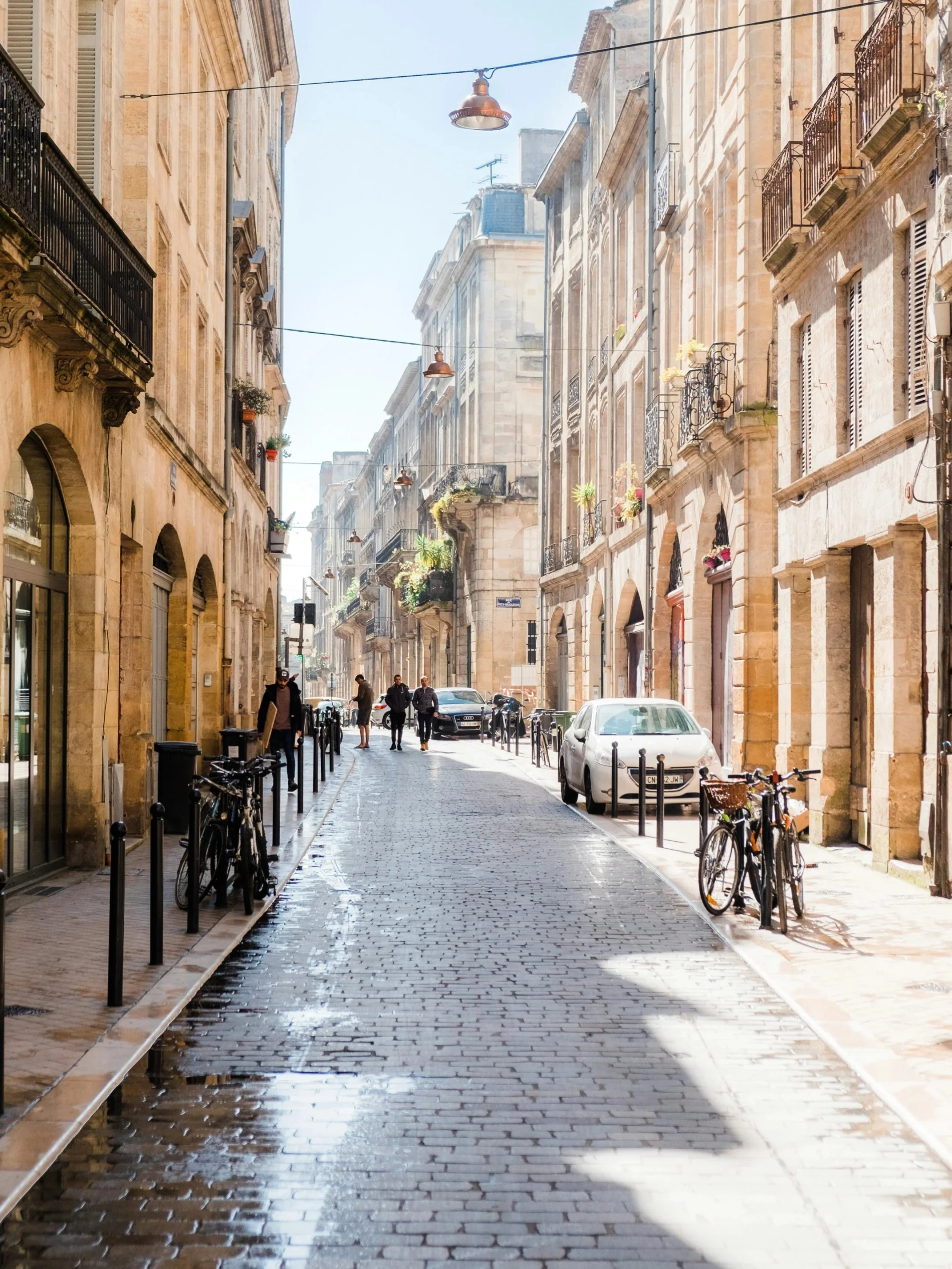
Leave the quays through Porte Cailhau, the monumental gate that once marked the entrance to the medieval city, then head into the Saint-Pierre district. This is the Bordeaux of narrow lanes, uneven cobbles and old shopfronts, and the best place in the center to simply get lost for half an hour. Ten minutes of exploring gives you the feel of the quarter better than any map.
Place du Parlement, framed by arcaded buildings, is the most pleasant spot in the area for a pause. Look up as you go: carved mascarons, wrought-iron balconies, coats of arms above the doorways. The real treasures of this quarter sit at eye level rather than in the shop windows, which is why a slow stroll beats a checklist here.
Further south, the Grosse Cloche appears above the rooftops. This belfry of the former town hall, topped by two slate spires, holds a bell that rings only a handful of Sundays each year. The vaulted passage beneath it is part of ordinary life for locals, who pass through without looking up.
If history interests you, the Musée d'Aquitaine two streets away covers twenty-five thousand years of the region, from prehistory to the colonial trade that built these facades. Allow an hour, and check the adult price online first: it is the most complete cultural stop in the Bordeaux city center, and an easy one to fit into a budget itinerary.
Lunch: Marché des Capucins and local specialties
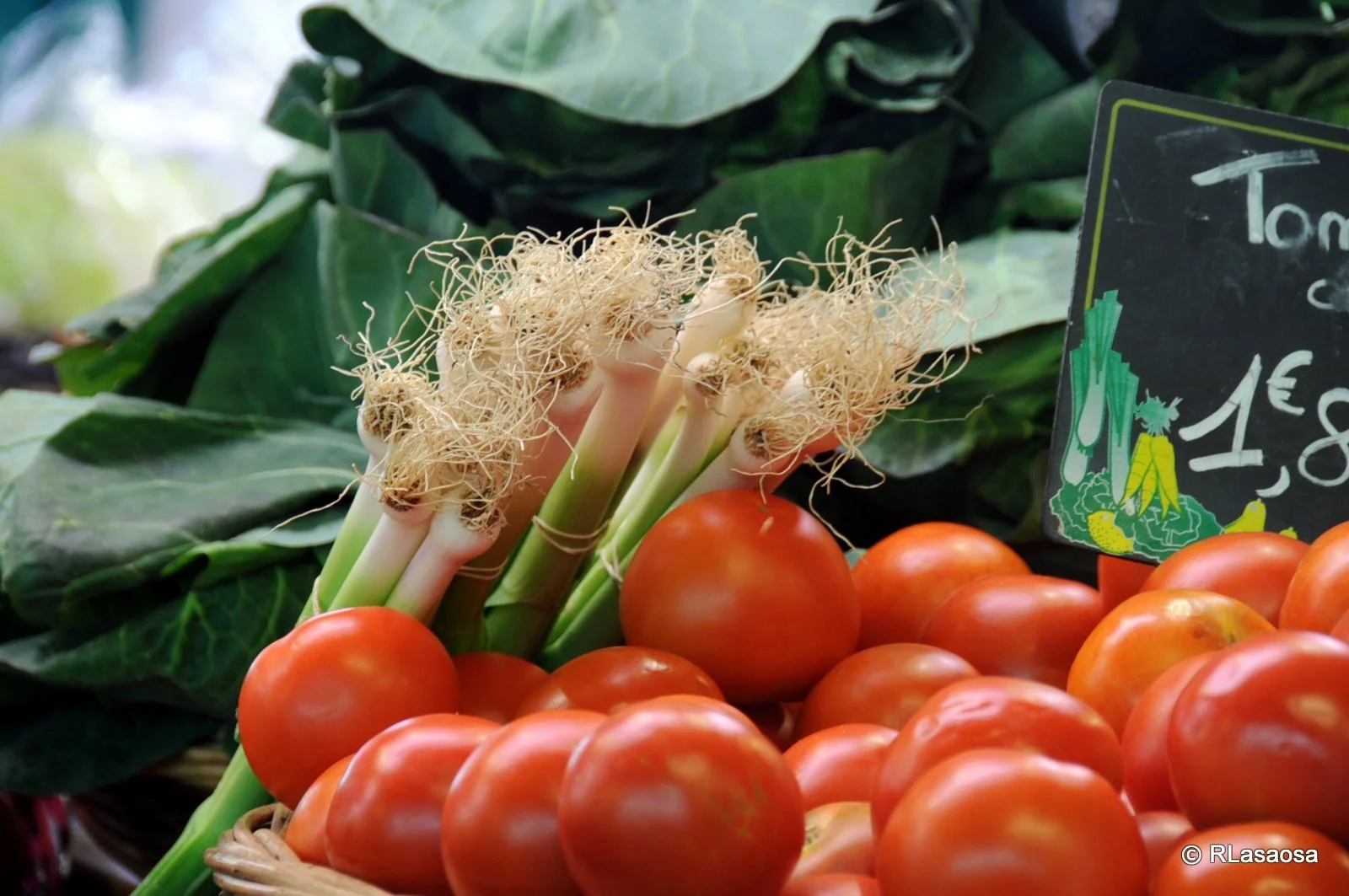
Head for the Marché des Capucins at midday. Trading since 1749 and nicknamed the belly of Bordeaux, it gathers around sixty stalls: seasonal produce, aged cheese, southwestern charcuterie, fish and flowers, Tuesday to Sunday until early afternoon. The atmosphere alone is worth the detour.
The local ritual never changes: a dozen Arcachon oysters opened in front of you, a glass of wine, a few prawns, standing at the counter. No tourism varnish, just regulars and producers. Eating here costs far less than a restaurant, which makes it the most affordable food tour in the city, and it leaves you time to explore the rest. It is a favorite with locals during the week, not a weekend show.
Prefer to sit down? The restaurants of the old center serve generous local cuisine: entrecôte à la bordelaise, lamprey, Pauillac lamb, and the canelé for dessert. Portuguese grocers and bakeries behind the market add another layer of dishes to Bordeaux food, one most visitors miss entirely. We recommend booking the night before, especially at the weekend.
Afternoon: Cathédrale Saint-André, Pey Berland tower and Rue Sainte-Catherine
Walk up to Place Pey Berland, the administrative and religious heart of the city. Cathédrale Saint-André unfolds its gothic architecture, its royal portal from the 13th century and some remarkable stained glass. Eleanor of Aquitaine married the future Louis VII here in 1137, an episode every guided tour repeats, and the tourist office runs a free walking tour that starts nearby.
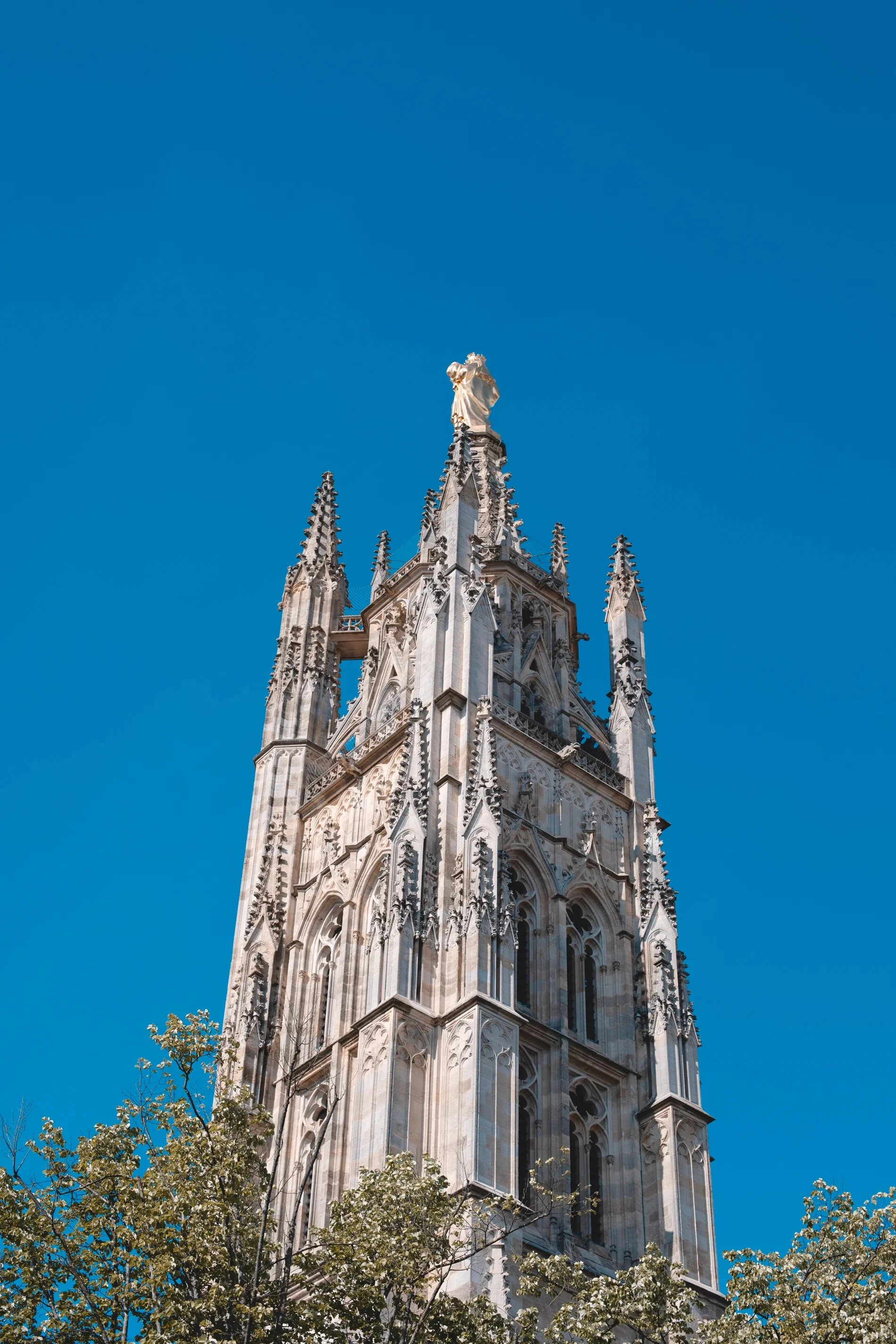
Next door, the bell tower is visited separately. Completed in the 15th century, it is climbed by a spiral staircase of more than two hundred and thirty steps. It is the highest point of the center open to the public: the climb is steep, the reward immediate, with a 360-degree panoramic view over tiled roofs, the Garonne and a good part of the Gironde. Buy your ticket in advance in high season.
From there, turn into Rue Sainte-Catherine. At 1.2 kilometres of fully pedestrian paving, it is the longest shopping street in Europe: international names to the north, independent boutiques as you head south. Going down, you easily reach Place de la Victoire and the basilica, whose free-standing tower is the tallest in southwestern France at 114 metres.
Late afternoon: Chartrons, Cité du Vin or the right bank
At this stage, three options open up. Pick a destination according to your mood, because they do not stack into a single afternoon.
The Chartrons. Historic home of the wine merchants, the district lines up antique dealers, brocantes, galleries and cellars. It is the richest quarter for tasting, and the most enjoyable for a slow stroll. A wine bar here will explain the difference between a left bank grand cru led by cabernet sauvignon and a right bank wine where merlot takes over, and several cellars run a short wine tasting workshop where you can enjoy three or four glasses without leaving the city.
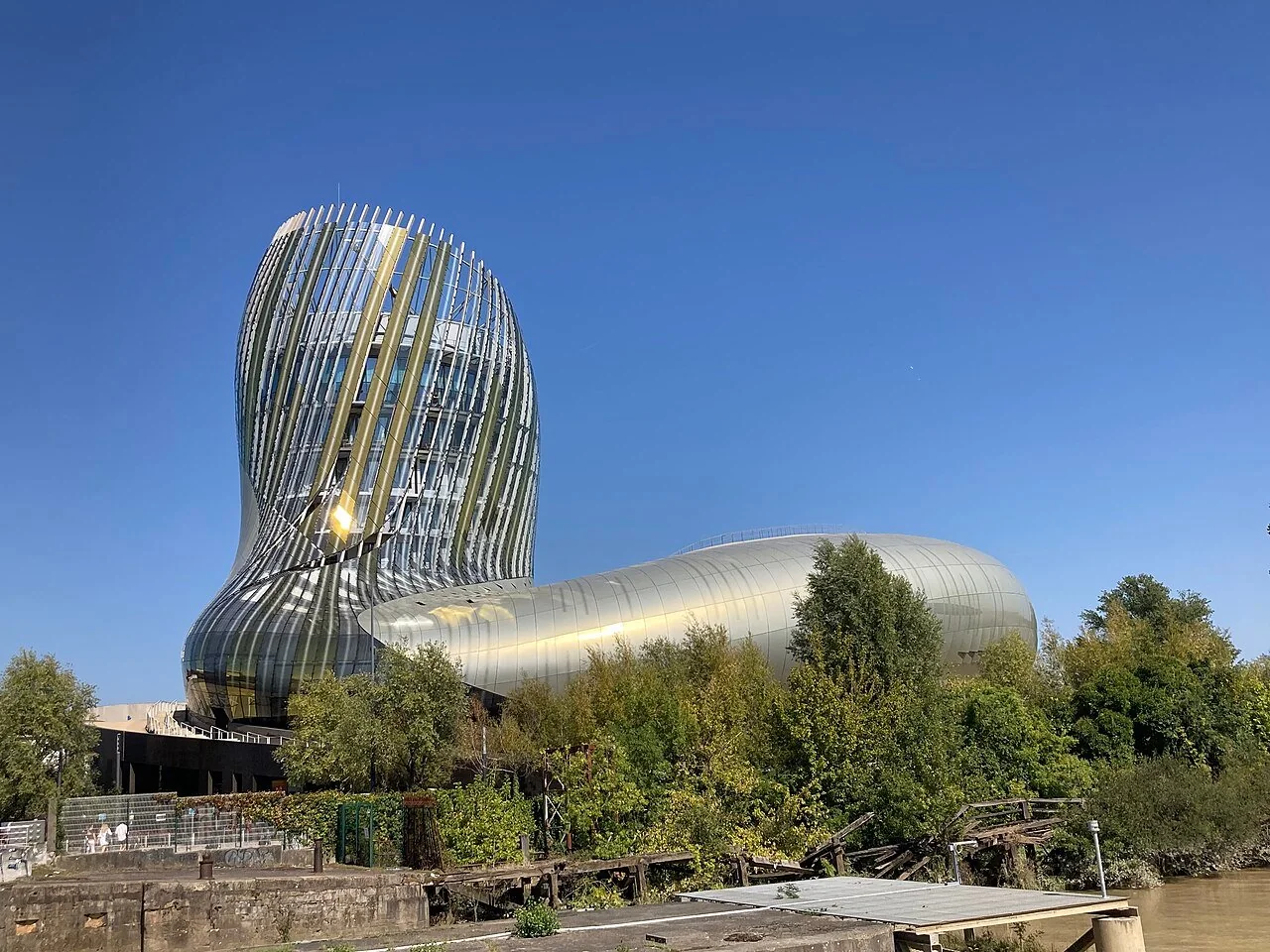
The Cité du Vin, in Bacalan. Recognisable from afar by its golden aluminium silhouette, this wine museum offers a digital route with interactive exhibits on vineyards worldwide, a tasting at the belvedere and a wonderful view over the Chaban-Delmas bridge. Allow two hours. One tram stop away, the Bassins des Lumières fill a wartime submarine base with immersive contemporary art: the most spectacular urban venue in the region.
The right bank. Cross the Pont de Pierre for a clear view back onto the historic center, at its best when the low sun turns the stone amber. From the middle of that bridge you feel the whole city open up. Darwin, set in the disused Niel barracks, mixes street art, an indoor skatepark, a bookshop, a second-hand space and an organic bistro.
The Jardin Botanique de la Bastide next door is a free green pause. A river shuttle also crosses back to the left bank: a short, cheap ride and a fine way to finish on the water.
Evening: Grand Théâtre, dinner and a signature cocktail
As the light goes, Place de la Comédie comes alive. The Grand Théâtre, a neoclassical palace signed by Victor Louis, raises twelve corinthian columns topped with statues, and its interior staircase inspired the one at the Opéra Garnier. If the Opéra National de Bordeaux programme allows, an evening performance is the finest possible ending, and a private box is easier to book than most visitors assume.
For dinner, the restaurants around Place du Parlement and the Chartrons offer everything from a bistro plate to a full dining experience. Keep it simple: one starter from the market, one main from the Southwest, one glass of Bordeaux. The classic dishes here beat any tasting menu.
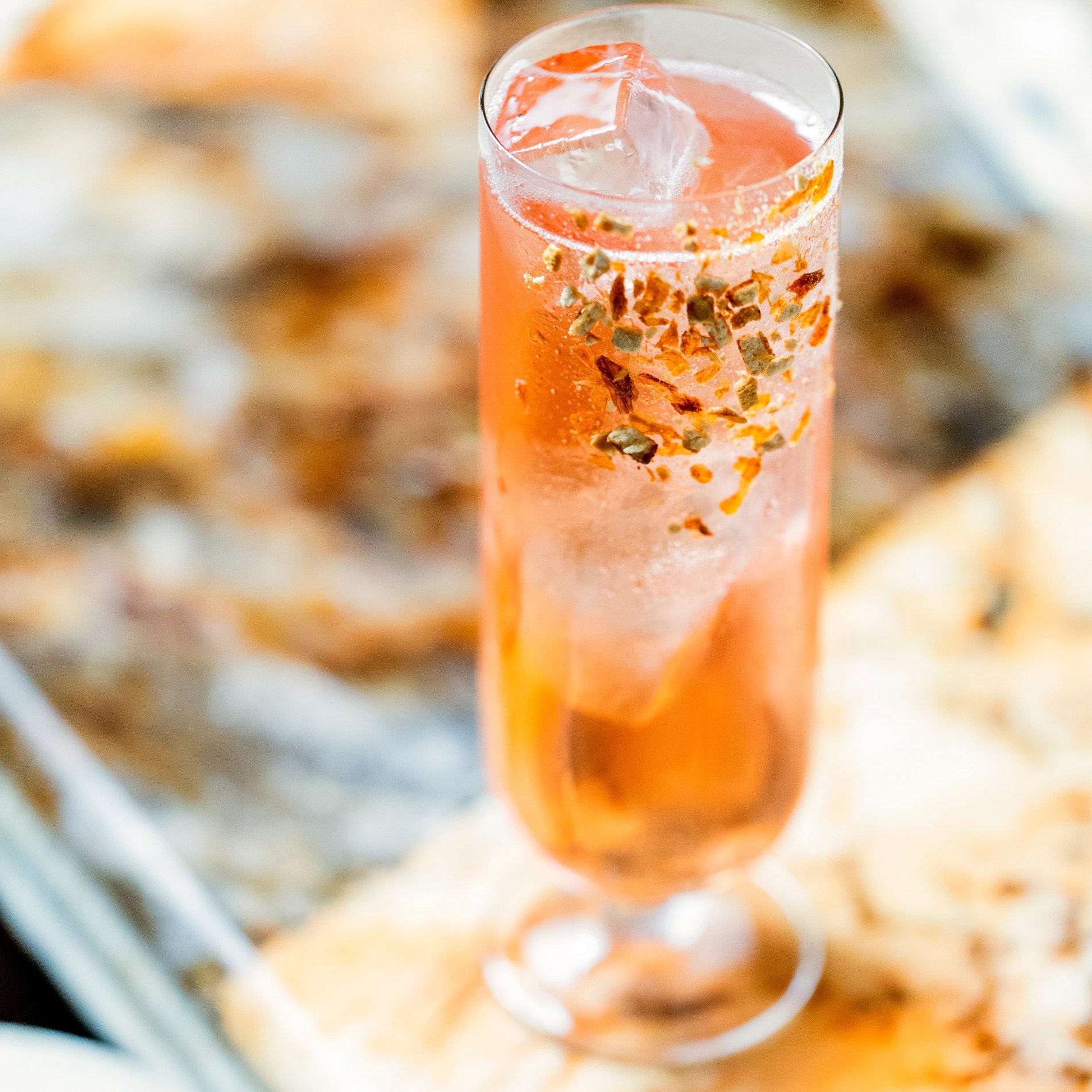
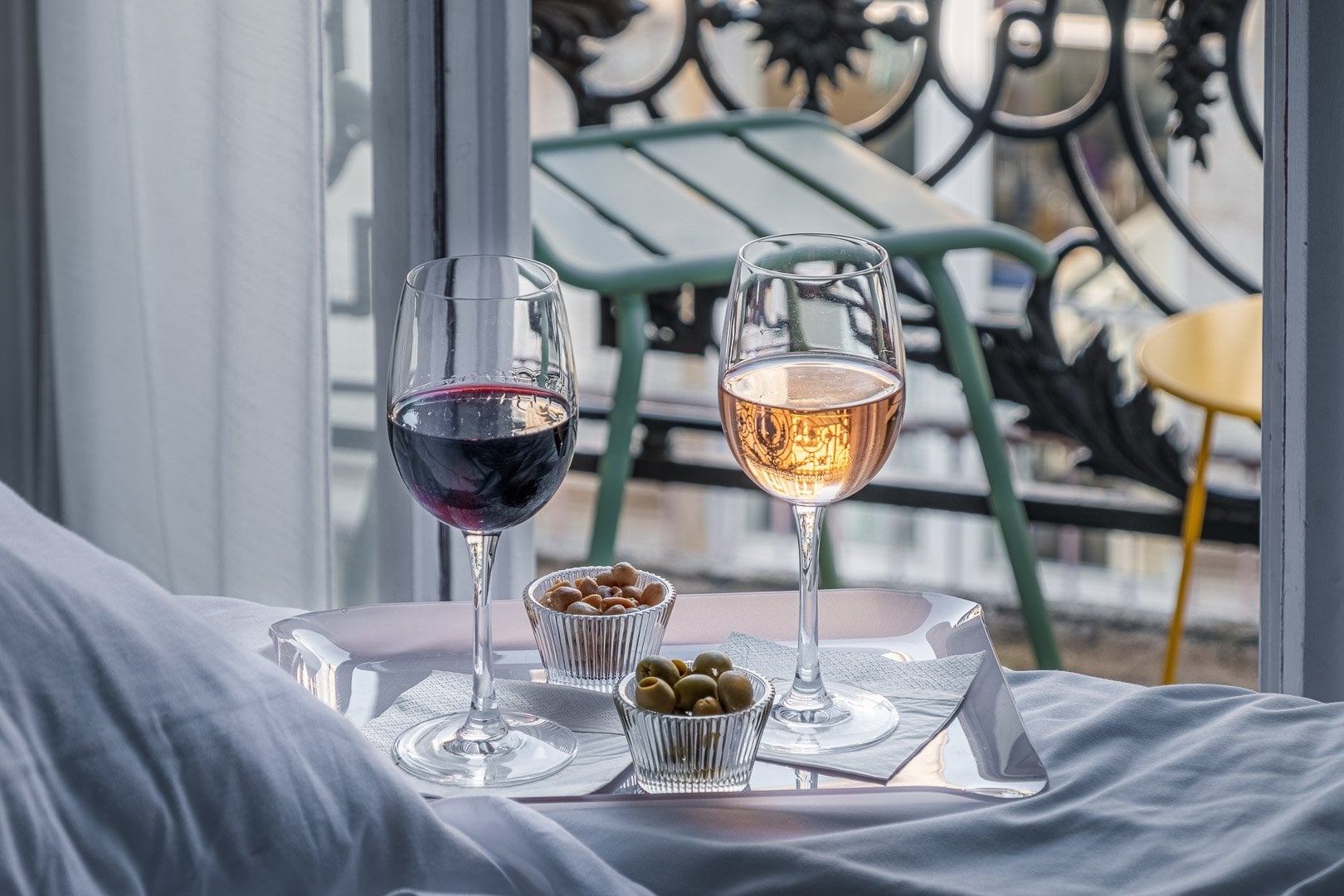
To finish, go back up Rue du Temple. The Casa Bar, on the ground floor of the Grand Hôtel Français, serves daily from 18:00 to 00:30 a signature list created with Jérémy Lauilhé, Meilleur Ouvrier de France Barman. Murals by Bordeaux artist Emma Kadroui cover the walls with scenes of the city. One last Bordeaux atmosphere before you climb one flight of stairs to bed.
Where to stay to spend a day in Bordeaux
A single visit goes fast, and every pointless journey eats into your sightseeing time. Among the hotels in Bordeaux, the Grand Hôtel Français is a 3-star boutique house located at 12 Rue du Temple, in a fully restored 18th century townhouse a few minutes on foot from the Grand Théâtre, Place Gambetta and the main shopping streets. The loop starts the moment you step outside.
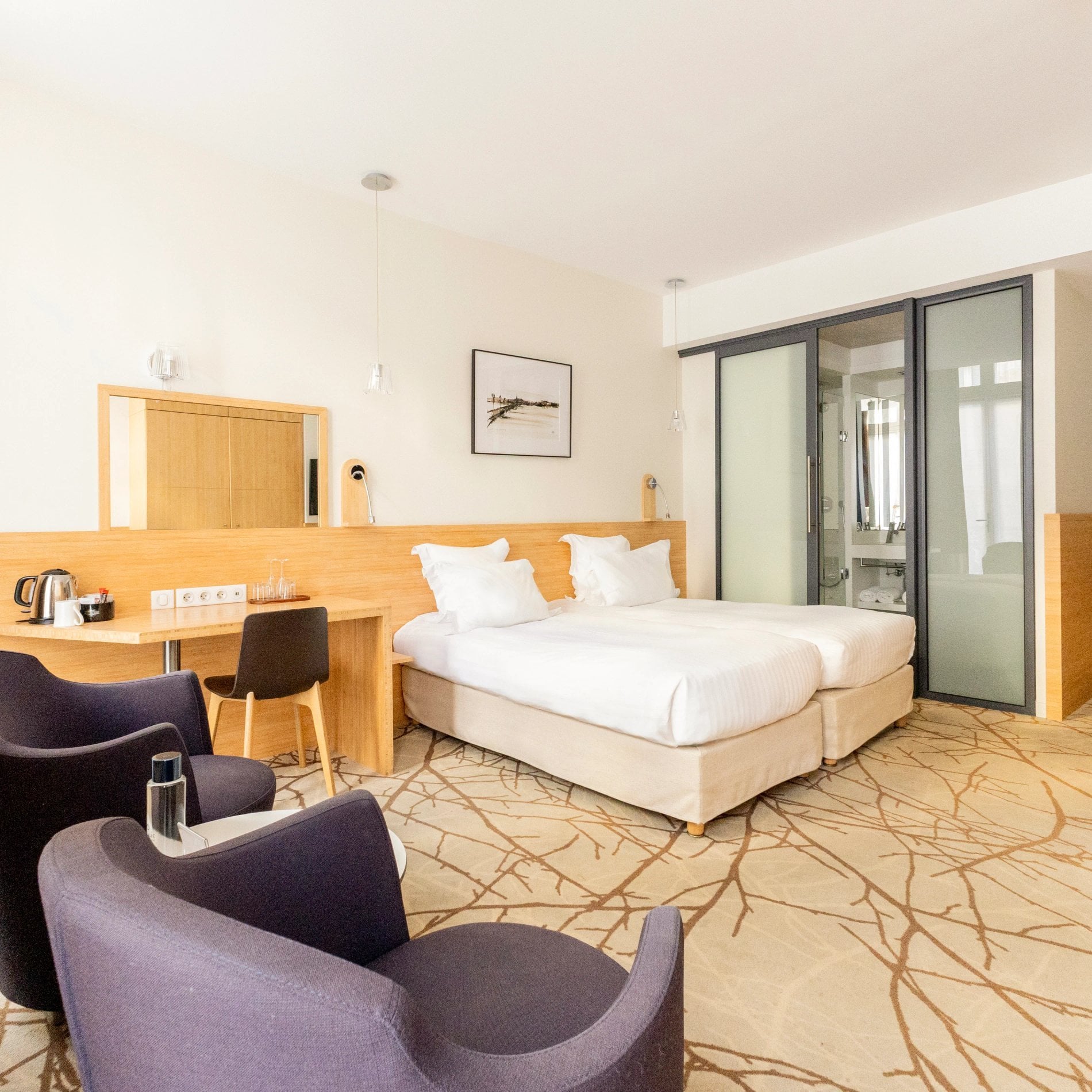
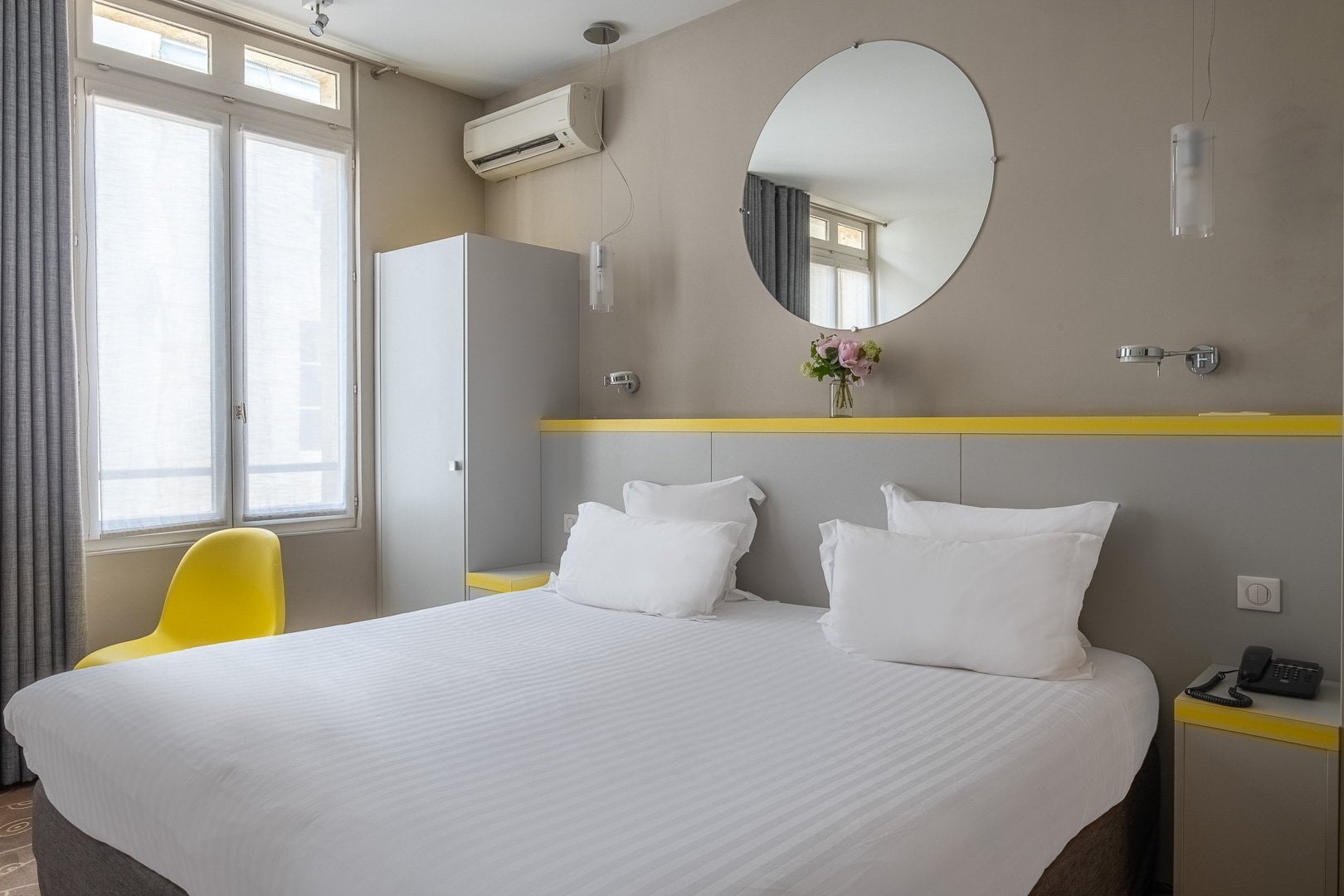
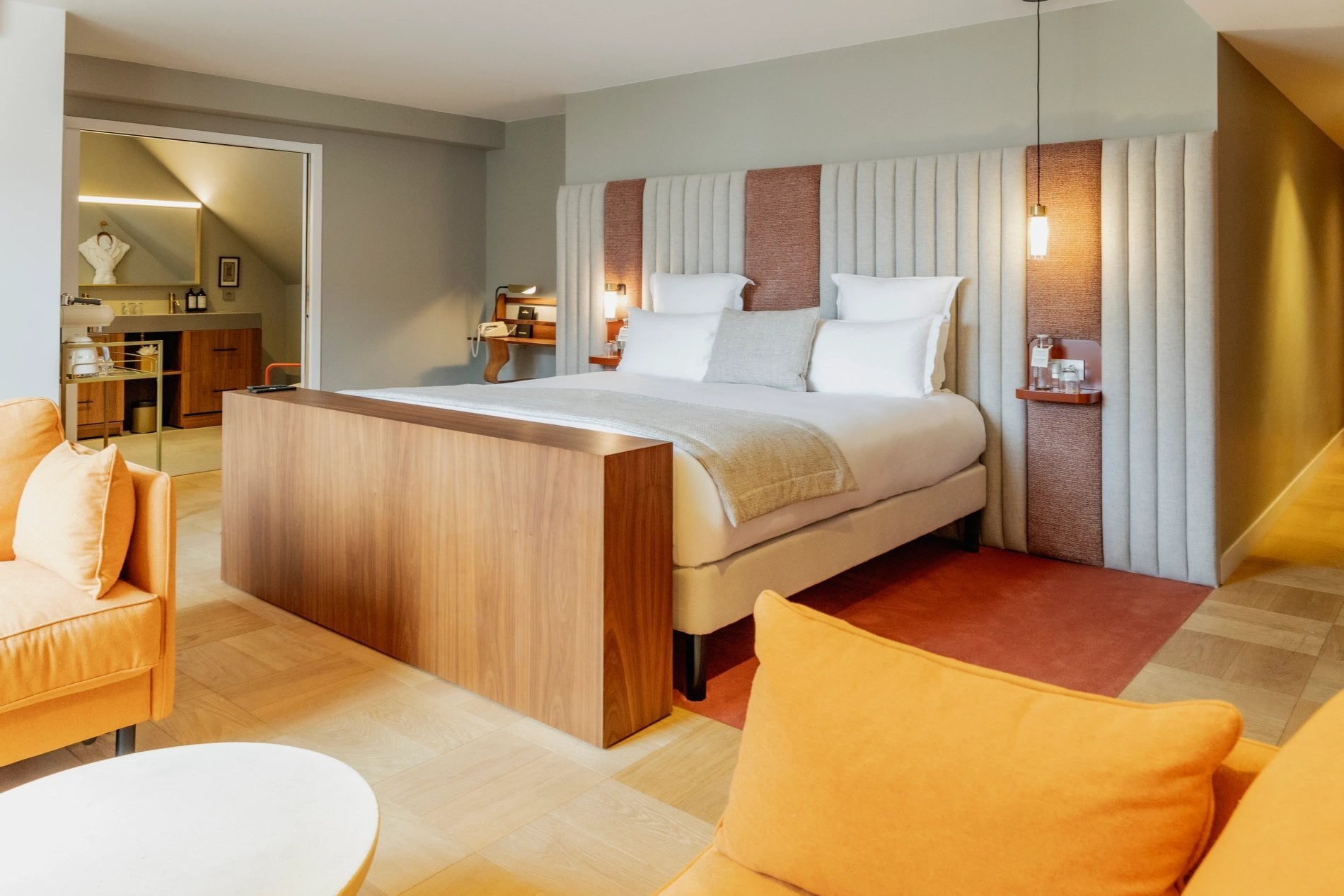
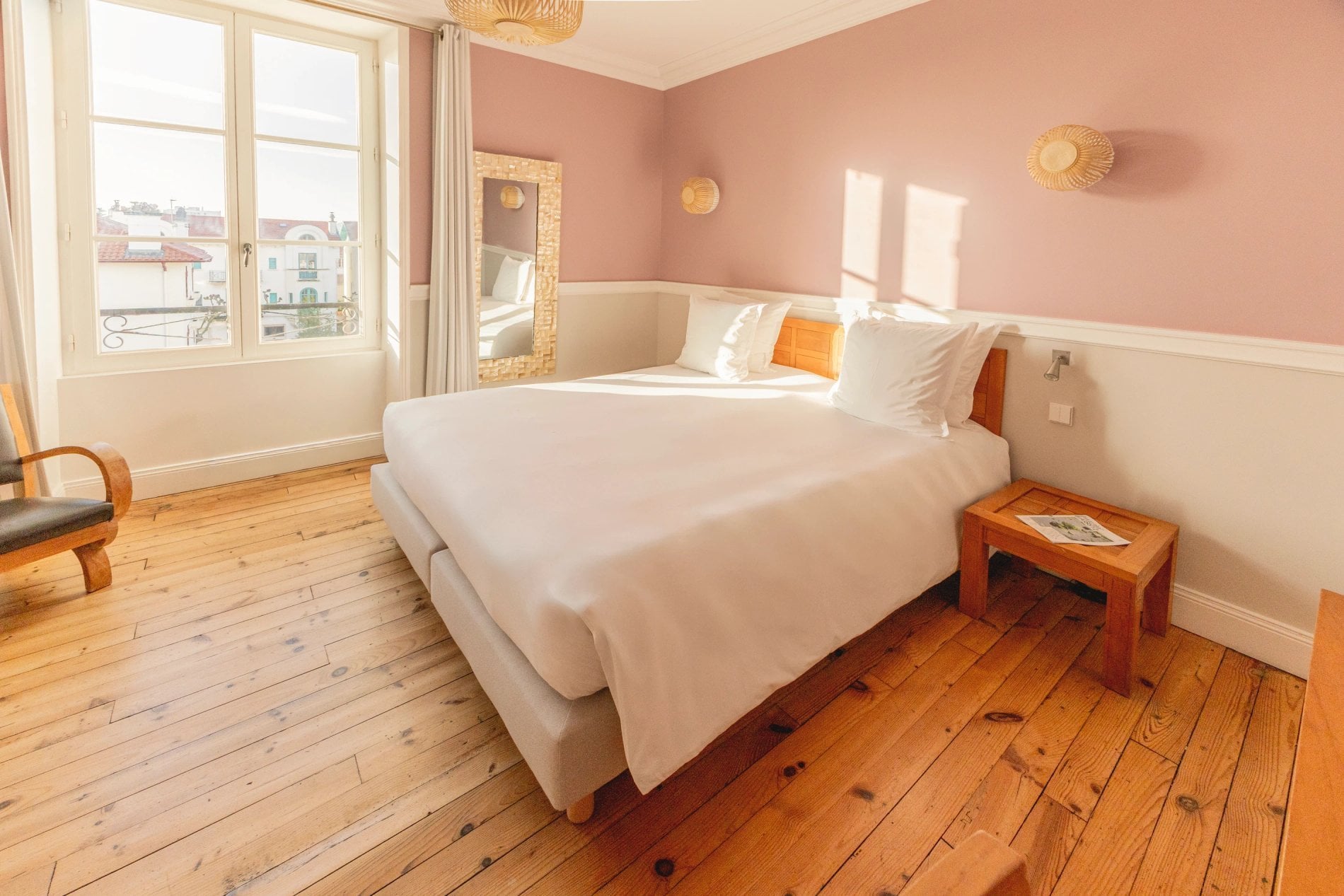
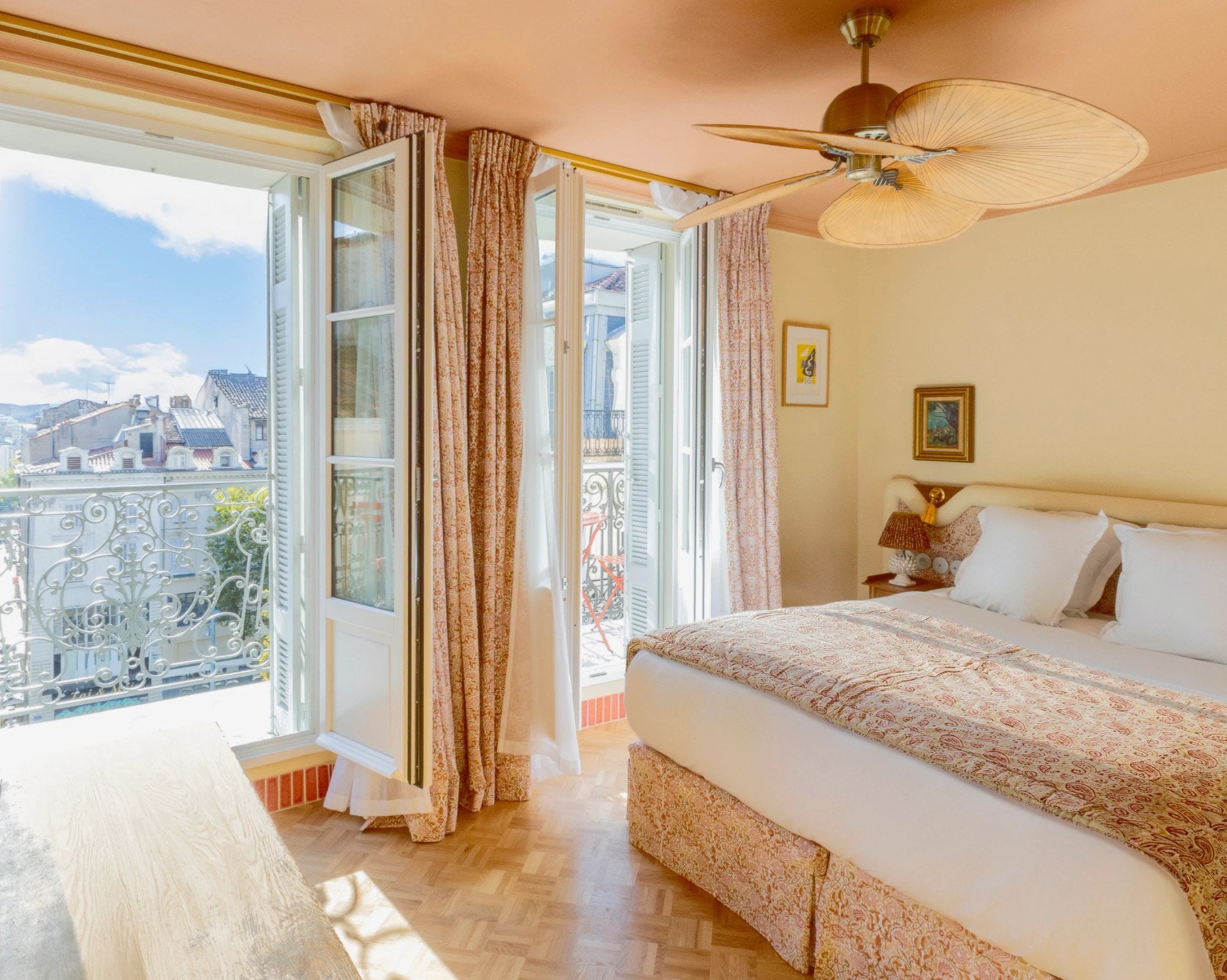
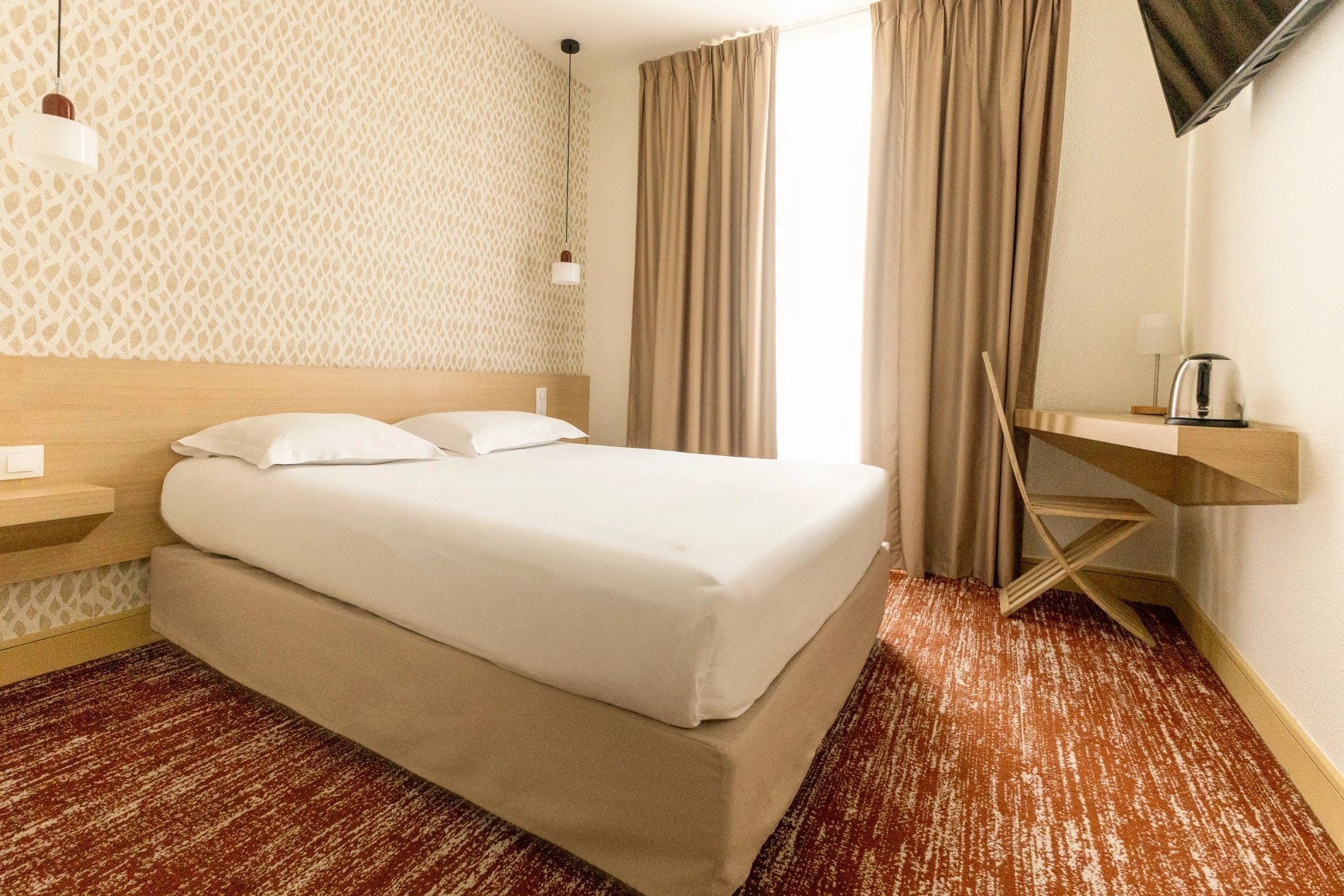
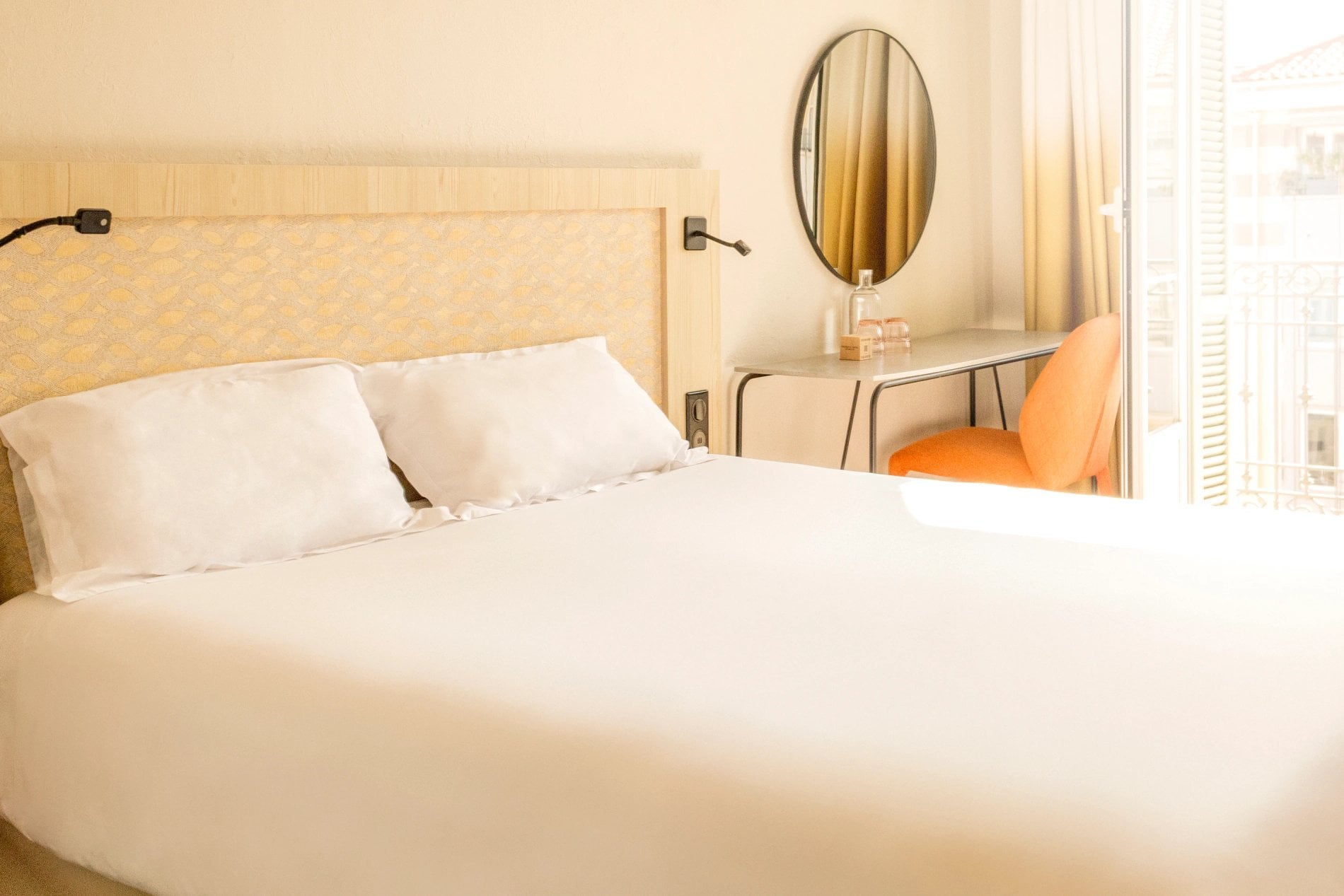
The house has 35 rooms in six categories, from Comfort and Superior to Deluxe with balcony, plus a ground floor room with disabled access. Each pairs the style of the original building with contemporary comfort:
- air conditioning and free wifi in every room
- private bathroom and flat-screen television
- Palace-quality mattresses and Edona quilts
- a balcony over the street in selected rooms
Families will find rooms for up to three people, with a cot on request, and pets are welcome for a supplement. The building is accessible to guests with reduced mobility. Reception doubles as a concierge desk: restaurant booking, tickets, and help to arrange a guided tour, a tasting workshop or a trip into the surrounding vineyards with an English-speaking guide.
Booking direct on the official website gives access to exclusive rates of up to 12% off, with best price guarantee and secure purchase.
Practical tips for visiting Bordeaux
Getting around the Bordeaux city center
The whole itinerary is walkable. For the far ends, the TBM network combines four tram lines, buses and river shuttles: line B serves Bacalan and the Cité du Vin, line A the right bank, line C the quays and the Bordeaux Saint-Jean train station. Cycle paths make bike hire easy and pleasant, and a hop-on hop-off bus covers the main sights. If you arrive by car, plan where to park: the center is largely pedestrian, and a secure car park sits 300 metres from Rue du Temple at a preferential rate for guests. Mérignac airport lies twenty minutes out, and a shuttle links the airport to the station in half an hour.
Bordeaux on a budget
Plenty of the best things to do in Bordeaux cost nothing. The miroir d'eau, the quays, the Jardin Public, Place des Quinconces with its Girondins monument, the street art at Darwin and the outside of every landmark are free. Add the free walking tour run by the tourist office and a market lunch, and a budget itinerary here is genuinely comfortable. There is plenty to fill twelve hours without buying a single ticket.
Best time to visit
April, May, June and September offer the best conditions: clear light, open terraces, manageable crowds. In summer the city lives outdoors until late. Autumn coincides with the harvest, the ideal moment to explore the historic estates of the Médoc, and winter stays mild enough for museums and long lunches.
Bordeaux with children
Bordeaux works well with kids on a short visit. Four activities to remember: the miroir d'eau, the Jardin Public and its ducks, the Parc Bordelais further west, and the Bassins des Lumières. Bring a light pushchair, since the cobbled lanes of the old town are not all comfortable, and save the mist of the mirror for the end.
Day trips from Bordeaux
If you have longer, the wine region starts thirty minutes from the center and makes the natural next step.
Saint-Émilion. Around forty kilometres away, reachable by car or by train, this medieval village is UNESCO listed in its own right. You get a monolithic church carved into the rock, steep cobbled lanes and wine estates open for tasting, including several classified growths. Half a morning is enough to get the measure of it, and most wineries welcome visitors for a workshop with explanations in English.
The Médoc. To the northwest, the château route lines up the grand cru classé estates along the D2. Margaux, Pauillac and Listrac need booking several days ahead in high season. Reception works with a local partner who organises the full Médoc wine tour, with 10% off for guests booking at the desk.
Arcachon Bay. About an hour away, the bay offers oyster huts at Cap Ferret, beautiful beaches and the climb up the Dune du Pilat, the tallest in Europe at around 110 metres. The panorama from the top, ocean on one side and pine forest on the other, is a wonderful reward, and exploring the beautiful surroundings makes the most popular excursion from Bordeaux with families.
One day is not enough to exhaust Bordeaux, and that is exactly what makes the trip work: you leave with a list for next time. Between the pale stone of the historic center, the reflection in the miroir d'eau, the smell of iodine in the market halls and one last cocktail on Rue du Temple, a short visit here leaves the precise memory of a beautiful city best travelled on foot.
One practical note to finish: sleeping in the center changes the whole rhythm. At 12 Rue du Temple, the Grand Hôtel Français occupies a restored 18th century townhouse two minutes from the Grand Théâtre and Place Gambetta. You start the route the moment you wake up, you drop your bags between two stops, and you end the evening at the Casa Bar without taking the tram. Green Key certified organic breakfast, a concierge desk that books your tables and your tickets, a partner car park 300 metres away, air-conditioned rooms for up to three guests: everything is set up so your hours go on sightseeing rather than travelling. Book direct on the official website for up to 12% off, a best price guarantee and flexible cancellation. Spring and autumn dates go quickly.
Frequently asked questions about what to see in Bordeaux in one day
Is one day enough to visit Bordeaux?
Yes, if you stay in the center. The miroir d'eau, Place de la Bourse, the Saint-Pierre district, the cathedral and its bell tower are all walkable in a single visit. The Cité du Vin or the right bank fit into the late afternoon, and the surrounding vineyards need a second visit.
When is the best time to visit Bordeaux?
April to June and September bring pleasant weather and moderate crowds. Autumn adds the harvest and the best tasting conditions of the year. From Paris, Toulouse or anywhere in France, the TGV makes a short trip realistic, with just over two hours each way from the main station.
What to see in Bordeaux in one day with kids?
Start on the quays, then the big central park, a climb up the belfry if the older ones are up for it, and the Bassins des Lumières for an immersive experience. A boat ride on the Garonne rounds off the outing, and pets are welcome at the hotel for a supplement.
What can you do in Bordeaux on a budget?
A great deal. The quays, the miroir d'eau, the Jardin Public, Place des Quinconces, the Girondins monument and the street art at Darwin are all free, as is the tourist office tour. Lunch at the market and one paid monument keep the whole itinerary affordable.
Where can you taste Bordeaux wine on a short visit?
The Cité du Vin includes a guided tasting at the belvedere, with the whole history of the vineyards on the way up. The wine bars and cellars of the Chartrons give personal recommendations to any wine lover. To see a château, allow half a morning towards Saint-Émilion or the famous wine estates of the Médoc.
Where can you eat local specialties in Bordeaux?
The Marché des Capucins is the fastest and most local option: oysters, dry white, southwestern dishes. For a sit-down meal, the restaurants of the old town and the Chartrons serve traditional French cooking. Book the night before at the weekend, since the good tables fill up quickly.
Do you need a car to explore Bordeaux?
No. The center is pedestrian and the tram reaches the further districts such as Bacalan or the Bastide. A car only becomes useful for excursions to the Médoc, Saint-Émilion or Arcachon. Renting for a single visit is rarely worth it if you stay in the city.
Where should you start a one day tour of Bordeaux?
Start on the quays at first light, when the light is best and the riverfront still quiet. You then move naturally up into the old town, on to Pey Berland, and the loop brings you back to your starting point. Allow roughly three hours for this first half.
What are the must-visit attractions in Bordeaux?
The landmarks not to miss:
• the miroir d'eau and its iconic square
• the Grand Théâtre and Place des Quinconces
• Cathédrale Saint-André and the Pey Berland belfry
• the Grosse Cloche and Porte Cailhau
• the Marché des Capucins and the Chartrons district
• the Cité du Vin, the city park and the Pont de Pierre